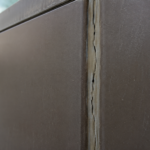
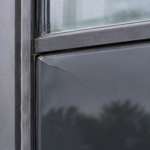
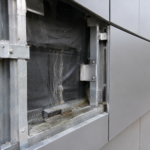
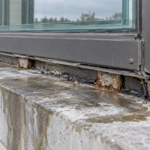
- Thermal breakage in spandrel glass follows a predictable fracture pattern that identifies the cause before any panel is removed.
- Sealed shadow box cavities on south and west exposures routinely reach 200 degrees Fahrenheit under peak solar conditions.
- High-reflectance vision glass adds a secondary solar load to adjacent spandrel panels that standard thermal calculations rarely include.
- The specification process breaks down at the handoff between facade engineers and curtainwall contractors with no single party owning cavity temperature.
- Requiring delegated thermal analysis as a shop drawing submittal is the minimum defensible standard of care for high-solar-gain facades.
Spandrel Glass Thermal Breakage: A Specification Failure
Why Spandrel Glass Breaks: And Why It’s Rarely the Glass’s Fault
A facade engineer on a 24-story mixed-use tower in Phoenix receives a call six months after substantial completion: three spandrel panels on the southwest elevation have cracked in a characteristic radial pattern originating near the panel edge. The glass supplier’s first response is to cite a handling defect.
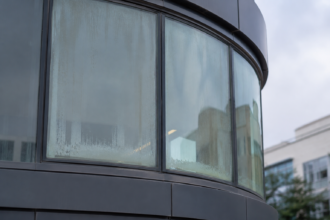
The engineer suspects something else entirely: the shadow box cavity behind those panels faces a high-reflectance vision glass return wall that nobody modeled thermally during specification. This scenario is not an outlier.
It repeats across high-solar-gain facades where spandrel glass thermal limits are treated as a manufacturer’s problem rather than a design variable.
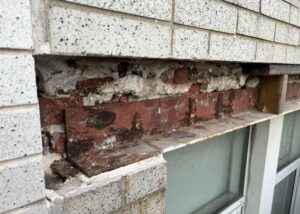
Thermal breakage produces a specific fracture signature: cracks initiate at the glass edge and propagate radially inward. Impact damage looks entirely different, with a central origin point and concentric ring patterns.
If you can read the fracture, you can assign responsibility accurately. The mechanism is straightforward: the sun-exposed face of the spandrel lite absorbs solar energy and heats up while the portion captured in the frame stays cool, creating tensile stress at the perimeter.
Heat-strengthened glass per ASTM C1048 tolerates approximately 100°F (38°C) of differential temperature between the exposed center and the shaded edge. Annealed glass tolerates roughly 35 to 40°F (17 to 22°C).
When cavity conditions push the exposed face beyond those thresholds, the glass breaks. The specification failed.
The glass performed exactly as its properties predicted.
What makes this failure pattern so persistent is that the fracture often does not appear immediately after installation. Thermal breakage typically manifests during the first full cooling season, when peak solar angles align with maximum ambient temperatures.
A panel installed in October in Phoenix may survive the mild winter without incident and crack the following July. That six-to-twelve month lag between occupancy and failure is long enough for the glass supplier, the curtainwall contractor and the specifying engineer to each point toward the other party’s scope.
The fracture origin tells the real story. A crack initiating within 1 to 2 inches of the glass edge, with no evidence of impact at the origin point, is thermal breakage until proven otherwise.
Documenting the fracture pattern with close-up photography before any panel is removed is the first step in any defensible post-failure investigation.
The Cavity Heat Trap: How Shadow Box Conditions Are Misunderstood
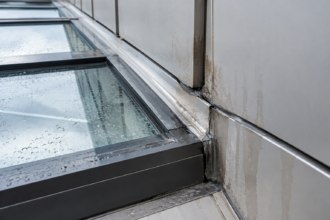
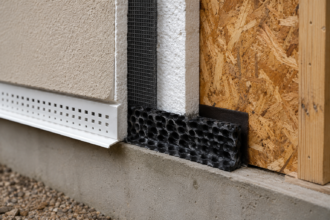
The shadow box assembly consists of three primary components: the outboard spandrel glass lite, an enclosed air cavity and an opaque backup panel that typically incorporates insulation, steel framing or a composite panel. The cavity is the problem.
In a sealed shadow box, solar energy absorbed by the spandrel lite has nowhere to go. The backup panel blocks convective dissipation to the interior.
The frame perimeter blocks it at the edges. The result is a closed thermal loop where absorbed heat accumulates in the cavity air and re-radiates back toward the inner face of the spandrel glass.
Sealed shadow box cavities on south and west exposures in IECC Climate Zones 1 through 3 routinely reach 180°F to 200°F (82°C to 93°C) under peak solar conditions. The GANA Spandrel Glass Design Guide documents this range and provides cavity temperature modeling guidance that most specifiers have never read.
At 200°F cavity air temperature, the inner surface of a dark ceramic frit spandrel lite can exceed the outer surface temperature, reversing the expected temperature gradient and creating a stress condition that heat-strengthened glass is not designed to manage.
Ventilated shadow boxes behave differently. A properly detailed vent path connecting the cavity to exterior air at both the top and bottom of each panel unit allows hot air to escape by convection, capping cavity temperatures well below the sealed-box threshold.
The problem is that ventilation is almost never detailed correctly in construction documents. Architects show a vent slot in section; the curtainwall contractor interprets it as a weep opening; the actual installed free area is a fraction of what convective relief requires.
That gap between intent and installation is where thermal failures originate.
The backup panel material selection compounds the problem in ways that rarely surface during design review. A dark-colored composite aluminum panel used as the shadow box back wall absorbs solar energy that penetrates the cavity through any vent opening and re-radiates it toward the spandrel lite inner surface.
A light-colored or foil-faced backup panel reduces that re-radiation load measurably. The GANA Spandrel Glass Design Guide includes absorptance values for common backup panel finishes and the difference between a dark gray composite panel and a white or foil-faced panel can shift cavity equilibrium temperature by 15 to 25°F under peak conditions.
That margin is meaningful when the heat-strengthened glass differential tolerance is 100°F and the cavity is already running at 175°F. Specifying backup panel finish color as a thermal performance variable, not just an aesthetic one, is a straightforward intervention that most curtainwall specifications never address.
The Reflectance Multiplier: How High-Performance Vision Glass Raises the Stakes
Spandrel panels sitting directly above or below vision lites with exterior solar reflectance values above 20 to 25% receive a concentrated secondary solar load that standard thermal stress calculations rarely account for. High-reflectance vision glass redirects a portion of incident solar energy onto adjacent surfaces, including the spandrel panels immediately above and below the vision zone.
On a southwest elevation in Phoenix, that reflected load arrives at peak intensity during the hours when ambient temperatures are already highest. The timing is the worst possible combination.
Low-e coatings selected to meet ASHRAE 90.1-2022 Section 5. 5 fenestration performance requirements frequently increase exterior surface reflectance as a byproduct of their thermal performance optimization.
A coating that achieves a SHGC of 0.25 and a U-value of 0. 28 for energy code compliance may carry an exterior reflectance of 30% or higher.
That number never appears in the energy model. It also never appears in the spandrel thermal stress calculation, because nobody required one.
The specification gap is structural. Vision glass is selected by the facade engineer or energy consultant for fenestration performance metrics.
The curtainwall contractor selects the spandrel glass type and shadow box construction details. Neither party models the thermal consequence of the vision glass reflectance for the adjacent spandrel panels.
The energy code compliance path under ASHRAE 90.1-2022 addresses SHGC and U-value for the vision lites; it says nothing about what those lites do to the thermal environment of adjacent opaque panel assemblies. That silence is where the Phoenix tower’s southwest panels cracked.
Quantifying the reflected load requires knowing the vision glass exterior reflectance value, the geometry of the spandrel panel relative to the vision lite and the peak solar incidence angle for the elevation and latitude in question. For a typical curtainwall module with a 60-inch vision lite height and a 24-inch spandrel panel directly above it, a vision glass with 30% exterior reflectance can add 40 to 60 BTU/hr-ft2 of incident energy to the spandrel panel surface during peak afternoon hours on a west elevation.
Added to the direct solar load on the spandrel lite itself, that secondary load can push the center-of-glass temperature 20 to 30°F higher than a calculation based on direct solar exposure alone would predict. The reflected load is not a rounding error.
On high-reflectance facades in Climate Zones 1 through 3, it is often the variable that pushes an otherwise marginal thermal condition past the breakage threshold.
Reading the Thermal Stress Calculation: What the Numbers Actually Mean
A thermal stress check for spandrel glass requires four inputs: absorbed solar energy at the glass surface (a function of color, frit density and any applied coating), cavity air temperature (modeled or measured), edge temperature (controlled by the frame mass and exterior ambient conditions) and the resulting temperature differential between the exposed center of the lite and the captured edge. The differential is the design variable.
Everything else feeds into it.
Edge condition matters more than most specifications acknowledge. Glass captured in a thermally massive aluminum frame with high thermal conductivity holds the edge temperature closer to ambient.
Glass set in a structural silicone assembly with minimal frame contact runs a warmer edge temperature, which actually reduces the differential and improves thermal stress performance. This is a case where the SSG detail outperforms the conventional captured frame detail for thermal stress purposes, even though SSG introduces other design considerations around wind load and glass replacement.
Edge quality compounds the risk. ASTM C1279 defines the photoelastic measurement method used to verify residual stress levels in heat-strengthened and fully tempered glass; those residual stresses define actual thermal tolerance.
A poorly seamed or ground edge introduces micro-cracks that act as stress concentrators, reducing the effective thermal tolerance below the published threshold for the glass type. A heat-strengthened lite with a compromised edge may behave more like annealed glass under thermal load.
Standard curtainwall specifications default to heat-strengthened spandrel glass per ASTM C1048 without requiring verification that cavity conditions stay within the 100°F differential limit. That default is a liability.
The specification should trigger a thermal stress analysis whenever shadow box cavities face south or west exposures above 35 degrees latitude or whenever adjacent vision glass carries an exterior reflectance above 20%.
The solar absorptance of the spandrel glass surface is the input that most directly controls the center-of-glass temperature and it is also the input most likely to shift between design intent and installed product. A specification that calls for a dark gray ceramic frit at 75% coverage on a clear base glass will produce a different absorptance value than the same frit pattern on a gray body-tinted base glass, even if the two lites look nearly identical from the exterior.
The GANA Glazing Manual provides absorptance values for common frit colors and densities, but those values are nominal. Actual absorptance varies with frit lot, firing temperature and base glass color.
Requiring the curtainwall contractor to submit measured absorptance data for the specified spandrel glass, rather than relying on published nominal values, closes a calculation gap that is small in individual magnitude but significant when the thermal margin is already tight. A 0.05 difference in absorptance on a west-facing panel in Phoenix translates to a 10 to 15°F difference in peak center-of-glass temperature under peak solar conditions.
That is not a negligible variance when the allowable differential is 100°F and the cavity is already contributing 80°F of that budget.
Where the Specification Process Breaks Down
The handoff gap is the core problem. Facade engineers establish glass type and performance criteria in the project specification.
Curtainwall contractors select shadow box construction details during shop drawing development. Neither party treats cavity temperature modeling as a coordinated deliverable that requires sign-off from both sides.
The result is a specification that requires heat-strengthened spandrel glass and a shadow box assembly without ever confirming that the two are compatible under actual thermal loading conditions.
Shop drawing review makes this worse. Standard submittal requirements for curtainwall systems include glass certifications, frame thermal performance data and structural calculations.
Thermal stress verification for spandrel cavities appears almost nowhere as a required submittal. Reviewers stamp glass certification documents that confirm the product meets ASTM C1048 without asking whether the installed cavity conditions stay within that product’s thermal limits.
Color selection compounds the failure. Opaque spandrel glass color, including ceramic frit density and body-tinted base glass selection, is driven by aesthetics and vision glass color-matching requirements.
A dark gray frit on a body-tinted base glass can carry a solar absorptance above 0.85. Nobody calculates the resulting surface temperature at peak solar exposure on a west elevation.
The GANA Glazing Manual and Curtainwall Design Guide identify submittal and coordination requirements for spandrel thermal performance, but those requirements are routinely omitted from standard specification sections because they require the specifier to write project-specific criteria rather than reference a generic product standard.
Insulation placement is the final compounding factor. Insulation installed tight to the back face of the spandrel glass, rather than at the backup wall, eliminates the cavity’s limited ability to moderate temperature through air movement.
It also creates a condition where the spandrel glass inner surface temperature tracks cavity air temperature almost directly. This detail appears in curtainwall shop drawings regularly.
It rarely triggers a comment during review.
The division of responsibility embedded in standard CSI MasterFormat section structure reinforces this breakdown. Section 08 44 13 covers glazed aluminum curtainwall systems and typically includes glass type requirements.
Section 07 92 00 covers joint sealants. Thermal performance criteria for the shadow box cavity as an integrated assembly fall into a gap between sections that no single trade owns.
The specifier who writes 08 44 13 focuses on glass product compliance and structural performance. The specifier who writes the thermal and moisture protection sections focuses on the backup wall and insulation.
The cavity temperature condition that results from the interaction of those two assemblies belongs to neither section by default. Writing a project-specific performance requirement into 08 44 13 that explicitly addresses cavity temperature limits and requires delegated thermal analysis from the curtainwall contractor is the only reliable way to close that gap.
It requires the specifier to step outside the standard product-reference model and write a performance criterion. That is more work.
It is also the work that prevents the call six months after substantial completion.
Mitigation Strategies That Actually Work in Practice
Fully tempered spandrel glass is the correct specification for south and west exposures in IECC Climate Zones 1 through 3 where sealed shadow box cavities are present. Fully tempered glass per ASTM C1048 tolerates temperature differentials above 200°F (93°C), which provides margin against even the worst sealed-cavity conditions.
The tradeoff is real: fully tempered glass requires ceramic frit for opacity because body tinting alone cannot achieve the opacity needed to conceal the backup assembly and fully tempered glass breaks into small fragments rather than large shards, which changes the fall hazard profile for overhead panels. Name the tradeoff in the specification and make the decision explicitly rather than defaulting to heat-strengthened because it is cheaper.
Shadow box ventilation requires a minimum free-area vent path connecting the cavity to exterior air at both the top and bottom of each panel unit. The GANA Spandrel Glass Design Guide recommends a minimum free vent area of approximately 1/300 of the cavity floor area; field installations rarely achieve half that.
Specify the free area numerically in the construction documents. Require the curtainwall contractor to demonstrate compliance in the shop drawing submittal with a section detail that shows actual vent dimensions, not a symbolic slot.
Require thermal stress analysis as a delegated engineering submittal from the curtainwall contractor, triggered by defined project criteria: south or west exposure above 35 degrees latitude, vision glass exterior reflectance above 20%, sealed shadow box construction or spandrel glass solar absorptance above 0.70. The analysis should calculate peak cavity temperature using project-specific orientation and climate data, confirm the temperature differential stays within the tolerance of the specified glass type and document the edge condition assumptions.
This is not an unusual requirement. It is the minimum defensible standard of care for high-solar-gain facades.
The delegated analysis requirement also shifts accountability to the party with the most direct control over the variables that determine cavity temperature: the curtainwall contractor who selects the backup panel, determines the insulation placement and details the vent path. Requiring a stamped thermal analysis as a condition of shop drawing approval creates a documented record that the installed assembly was evaluated against the thermal limits of the specified glass.
That record matters when a panel cracks in year two and the glass supplier’s first response is to cite a handling defect. It also creates an incentive for the curtainwall contractor to detail the vent path correctly the first time, because the analysis will expose an undersized vent opening before it becomes a field condition.
Pairing the delegated analysis requirement with a pre-installation mockup that includes instrumented cavity temperature monitoring during peak solar exposure hours adds a field verification layer that no calculation alone can provide. Thermocouples placed at the center of the spandrel lite inner surface and at the frame contact point during a mockup test on the project site, oriented to the critical exposure, will confirm or refute the calculated differential before the full installation proceeds.
The Specification You Write Today Determines the Call You Get in Year Two
Thermal breakage in spandrel glass is a predictable outcome. The physics are not subtle.
The failure modes are documented. The mitigation strategies exist and are buildable.
What fails consistently is the specification process: the assumption that selecting a code-compliant glass product and calling for a shadow box assembly constitutes adequate thermal design.
The next generation of facade specifications on high-solar-gain projects needs to treat cavity temperature as a calculated design output, not an assumed acceptable condition. That means requiring thermal analysis as a submittal, specifying ventilation by free area rather than by detail intent and selecting glass type based on verified cavity conditions rather than cost default.
The engineer who wrote the Phoenix tower specification did not make an unusual mistake. The mistake is standard practice.
That is the problem worth fixing.