

Can AI Improve Building Envelope Quality Control?
Quality control remains one of the most persistent challenges in building envelope construction.
Even well-designed enclosure systems can fail when installation quality is inconsistent.
Many of the most serious building envelope problems are not caused by product defects or design flaws. Instead, they result from:
- Incomplete installation
- Poor sequencing
- Inadequate substrate preparation
- Missing transitions
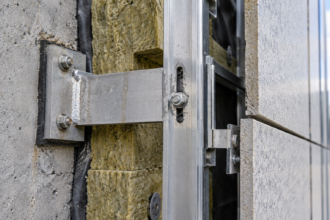
- Improper fastening
- Inconsistent workmanship
- Coordination failures between trades
As projects become more complex and construction schedules become more compressed, maintaining consistent enclosure quality has become increasingly difficult.
Artificial intelligence is beginning to emerge as a tool that may help improve portions of the quality-control process.
While AI will not replace field inspections or experienced consultants, it may improve documentation, issue tracking, and identification of recurring installation deficiencies.
Why Building Envelope Quality Control Is Challenging
Building enclosure systems involve multiple materials, trades, and sequencing dependencies.
A typical facade assembly may require coordination between:
- Structural framing
- Air barriers
- Waterproofing membranes
- Insulation systems
- Cladding supports
- Windows and curtain walls
- Roofing systems
- Sealants and flashings
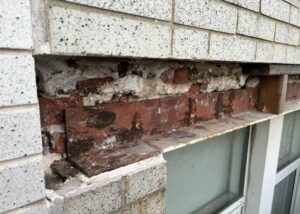
Failures often occur at transitions between systems rather than within individual components.
Many of these conditions become concealed quickly during construction.
Once cladding systems are installed, identifying hidden deficiencies becomes significantly more difficult and expensive.
Traditional quality-control processes rely heavily on:
- Periodic site observations
- Manual photo documentation
- Inspection reports
- Contractor self-reporting
- Mock-up testing
- Punch lists
While effective, these methods can be labor intensive and highly dependent on individual experience.
AI-assisted systems may help improve consistency and documentation management.
AI-Assisted Image Recognition
One of the most discussed applications of AI in construction quality control is image recognition.
AI systems can analyze site photographs and compare installed conditions against expected assemblies.
Potential applications include:
- Detecting missing fasteners
- Identifying incomplete flashing installation
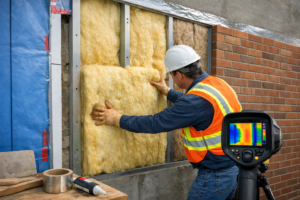
- Reviewing insulation coverage
- Monitoring sealant continuity
- Comparing installed conditions to BIM models
- Tracking construction progress
Some contractors are already combining:
- Drone imagery
- Mobile photo capture
- Laser scanning
- 360-degree site imaging
with AI-driven analysis tools.
These systems may help teams identify issues earlier and improve project documentation.
On large projects with extensive facade areas, automated image analysis could reduce the amount of time required for manual photo review.
Improving Documentation and Traceability
Construction quality control generates large volumes of documentation.
AI may improve how this information is organized and accessed.
Potential benefits include:
- Faster report generation
- Automated photo categorization
- Searchable field observations
- Improved issue tracking
- Better coordination between project teams
- Identification of recurring deficiencies
For example, AI systems may eventually recognize repeated installation issues across multiple floors or facade zones and flag them for further review.
This type of pattern recognition may help project teams address systemic problems earlier.
Improved documentation could also strengthen long-term accountability and warranty management.
AI and Construction Sequencing
Many enclosure failures are sequencing-related.
Problems often occur when:
- Temporary protection is inadequate
- Materials are exposed prematurely
- Interfaces are concealed before inspection
- Work is installed out of sequence
- Moisture-sensitive materials become contaminated
AI-assisted project management systems may help monitor sequencing and construction progress more effectively.
Potential capabilities include:
- Tracking installation status
- Monitoring schedule deviations
- Identifying incomplete inspection checkpoints
- Comparing actual progress against planned sequencing
This could improve communication between contractors, consultants, and owners.
However, sequencing decisions still involve practical construction judgment that AI systems do not fully understand.
Limitations of AI in Field Quality Control
Despite its potential, AI has significant limitations in construction environments.
Many critical enclosure conditions cannot be reliably identified through image analysis alone.
Examples include:
- Improper substrate preparation
- Moisture contamination
- Inadequate adhesion
- Hidden discontinuities
- Fastener embedment issues
- Material incompatibility
- Improper curing conditions
Construction sites are also highly variable environments.
Lighting conditions, weather, access limitations, and inconsistent photo quality can reduce the accuracy of automated analysis.
There is also a risk that teams may place excessive trust in automated systems.
AI-generated outputs can appear highly confident even when incomplete or inaccurate.
Quality control still requires experienced field personnel who understand:
- How systems are assembled
- Where failures commonly occur
- Which conditions require further investigation
- How installers interpret details
- What acceptable workmanship actually looks like
The Continued Importance of Field Observation
Physical observation remains essential to building envelope quality control.
Experienced enclosure consultants routinely evaluate conditions that extend beyond visible appearance.
This includes:
- Material rigidity
- Moisture presence
- Adhesion performance
- Surface preparation quality
- Concealed conditions
- Sequence-related risk
These assessments often depend on tactile observation, technical interpretation, and practical experience.
AI may improve efficiency and documentation, but it cannot fully replace field expertise.
The most effective approach will likely involve combining:
- Experienced inspectors
- Strong quality-control procedures
- Clear documentation standards
- AI-assisted analysis tools
rather than relying on automation alone.
How AI May Change Contractor Workflows
As AI systems improve, contractors may increasingly integrate these tools into routine quality-management processes.
Potential future applications include:
- Real-time installation tracking
- Automated deficiency reporting
- Integrated inspection management
- Predictive quality-risk analysis
- Digital turnover documentation
This could improve consistency across large projects and reduce administrative burden.
However, adoption will likely vary depending on:
- Project size
- Contractor resources
- Client expectations
- Technology costs
- Liability concerns
Smaller projects may see slower adoption compared to large institutional or commercial developments.
Conclusion
AI has the potential to improve portions of building envelope quality control by enhancing documentation, image analysis, issue tracking, and project coordination.
The technology may help project teams identify recurring deficiencies earlier and manage large volumes of construction data more efficiently.
At the same time, enclosure quality remains heavily dependent on:
- Constructability awareness
- Installation sequencing
- Field experience
- Technical judgment
- Physical inspection
AI can support quality-control processes, but it cannot replace the expertise required to evaluate complex field conditions and ensure durable enclosure performance.
For the foreseeable future, the most successful projects will likely combine advanced digital tools with experienced building envelope professionals who understand how systems perform under real-world construction conditions.