- IBC 2021 Section 1406 introduces stricter fire performance requirements that directly affect how metal cladding systems are specified and installed.
- ACM, aluminum and steel each carry distinct fire risks that must be evaluated against NFPA 285 and ASTM E119 testing standards.
- Real-world non-compliance cases have resulted in costly retrofits, legal liability and increased fire risk for building occupants.
- Emerging technologies like intumescent coatings and advanced composites are helping designers meet safety codes without sacrificing aesthetics.
- Building envelope consultants must stay current with evolving national and local codes to protect clients from compliance failures.
Recent changes to the International Building Code (IBC) 2021, specifically Section 1406, have sparked a critical reevaluation of metal cladding systems. These changes address new fire performance requirements for exterior walls, pushing architects and building envelope consultants to strike a balance between aesthetic appeal and safety compliance. Section 1406’s revisions emphasize the need for materials that not only enhance the visual impact of a building but also meet stringent fire safety standards.
Building envelope consultants must grasp these updates to guide their clients effectively. Ignoring these changes risks non-compliance and potential liability. The urgency is clear.
Understanding Metal Cladding Systems
Metal cladding systems encompass a range of materials, each with distinct fire performance characteristics. Aluminum Composite Material (ACM), aluminum and steel are the most common. ACM panels are popular for their lightweight and versatile design options, yet they can pose significant fire risks if not properly tested and installed.
Recent incidents have shown that improper installation can lead to rapid fire spread, highlighting the need for adherence to testing protocols like NFPA 285. Aluminum offers corrosion resistance and aesthetic versatility, but its melting point requires careful consideration in fire-prone areas. For example, in regions prone to wildfires, using aluminum may necessitate additional protective measures. Steel, known for its strength and durability, generally performs well under fire conditions but can be heavy and costly.
It often requires structural support that must be factored into the design. Selecting the right material depends on the building type, location and specific fire performance needs. The NFPA 285 test standard is important for evaluating the fire propagation characteristics of these systems.
Understanding these differences and testing requirements is essential for making informed decisions in cladding selection.
Fire Safety Regulations and Compliance
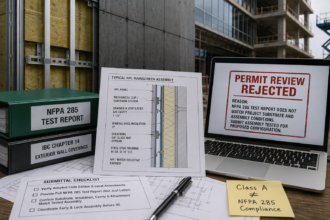
IBC 2021 Section 1406 lays out stringent requirements for the fire performance of metal cladding, demanding that assemblies meet specific criteria to prevent flame spread along the exterior. This section mandates testing, such as the NFPA 285, to ensure compliance. ASTM E119 plays a critical role in fire resistance testing, measuring the ability of an assembly to withstand heat and flame over time.
While national standards provide a baseline, local building codes may introduce additional requirements or amendments, complicating compliance. For example, a city in a wildfire-prone area might impose stricter regulations than the IBC mandates. Navigating these layers of regulation requires a deep understanding of both national and local codes.
Consultants must remain vigilant, ensuring that all materials and designs meet or exceed the required standards. Failure to do so can result in severe penalties and increased liability risks. In some cases, non-compliance has led to mandatory retrofits, which can be costly and time-consuming.
Fire Performance Testing for Metal Cladding
Fire performance testing is a cornerstone of ensuring the safety of metal cladding systems. NFPA 285 evaluates the fire propagation characteristics of exterior wall assemblies, while ASTM E84 assesses surface burning characteristics, including flame spread and smoke development. ASTM E119 tests the fire resistance of building assemblies, focusing on structural integrity during fire exposure.
Recent NFPA 285 test results for ACM panels have highlighted vulnerabilities in certain configurations, emphasizing the need for rigorous testing. Case studies reveal that while some systems pass with flying colors, others fail due to improper installation or material selection. For instance, an ACM system that passed lab tests failed in the field because of installation errors, leading to significant fire damage.
These tests provide critical data for architects and consultants, enabling informed decisions on cladding systems. Regular testing and re-evaluation are necessary to ensure ongoing compliance and safety. Continuous monitoring and adherence to testing protocols can prevent future failures and ensure building safety.
Design Flexibility vs. Safety
Balancing design flexibility with fire safety requirements presents a significant challenge. Architects often strive for new designs that push aesthetic boundaries, but these must align with strict fire safety codes. Technology plays a important role in achieving this balance.
For instance, advancements in coatings and finishes can enhance the fire performance of metal cladding without compromising visual appeal. ASTM E84’s flame spread index helps guide design decisions, ensuring that materials meet safety standards while allowing for creative expression. New solutions, such as integrating fire-resistant layers within the cladding system, demonstrate that safety and design are not mutually exclusive.
Successful projects show that it’s possible to achieve both, but it requires a keen understanding of materials and codes. A project that incorporated fire-resistant barriers within its cladding system achieved both aesthetic and safety goals, setting a precedent for future designs.
Case Studies of Compliance and Non-Compliance
Examining real-world examples of compliance and non-compliance offers valuable lessons. A high-profile case of non-compliance involved a building that failed to meet NFPA 285 standards, resulting in a costly retrofit and legal ramifications. This case highlights the importance of adhering to fire safety regulations from the outset.
Conversely, successful projects demonstrate best practices in fire-safe metal cladding. For example, a recent skyscraper project utilized advanced materials and rigorous testing to achieve compliance, setting a benchmark for future designs. NFPA fire incident data highlights the consequences of neglecting safety standards: increased fire risk and potential loss of life.
Learning from these scenarios can guide future projects, emphasizing the importance of compliance and proactive design strategies. These case studies serve as reminders that early investment in compliance can prevent costly mistakes later.
Future Trends in Metal Cladding Fire Safety
Emerging materials and technologies promise to enhance the fire performance of metal cladding systems. Innovations like intumescent coatings and advanced composite materials offer improved resistance to fire without compromising aesthetics. Anticipated updates to IBC and NFPA standards will likely incorporate these advancements, pushing the industry toward safer, more efficient designs.
Sustainability is also playing an increasing role in cladding design, with eco-friendly materials gaining traction. The future of fire-safe cladding lies in the integration of these technologies with evolving codes. Consultants must stay ahead of these trends, anticipating changes and adapting their practices accordingly.
By embracing new materials and methods, the industry can achieve higher safety standards while maintaining design integrity.
Practical Recommendations for Consultants
Building envelope consultants must conduct thorough fire performance evaluations of metal cladding systems. This includes understanding the specific requirements of IBC 2021 Section 1406 and related standards. Staying updated with evolving codes is important: subscribing to industry publications and attending seminars can aid in this effort.
Communicating fire safety considerations to clients requires clarity and precision. Consultants should emphasize the importance of compliance and the potential consequences of neglect. Collaboration with manufacturers and testing agencies ensures that consultants remain informed about the latest advancements in fire performance.
By building strong relationships with these entities, consultants can gain insights into new technologies and materials that enhance safety and compliance.
Practical Recommendation
To navigate the evolving landscape of fire safety regulations, building envelope consultants must prioritize continuous education and proactive engagement with code updates. This approach ensures compliance and supports new design. Collaborating with manufacturers and testing agencies provides valuable insights into advancements in fire performance.
By staying informed and adaptable, consultants can effectively guide their clients in making safe, compliant and aesthetically pleasing choices. Engaging in ongoing professional development and building a network of industry experts can further enhance a consultant’s ability to navigate complex fire safety challenges.