- Recent IBC Section 1406 updates impose stricter fire testing and documentation requirements for metal cladding on high-rise buildings.
- NFPA 285 and ASTM E119 are now central standards that cladding assemblies must satisfy to prevent vertical fire spread.
- Aluminum composite materials with combustible cores have driven a shift toward mineral-filled cores with superior fire resistance.
- Proper installation and third-party inspection are as critical as material selection for achieving real-world fire performance.
- Emerging technologies like intumescent coatings and evolving sustainability credits are shaping the future of cladding fire safety.
Navigating Fire Performance Codes for Metal Cladding in High-Rise Buildings
Recent updates to the International Building Code (IBC) Section 1406 have introduced stringent fire performance requirements for metal cladding in high-rise buildings. This change was prompted by high-profile fire incidents that highlighted vulnerabilities in cladding systems. Understanding these updates is important for ensuring compliance and safety in modern high-rise construction.
Understanding the Importance of Fire Performance in High-Rise Buildings
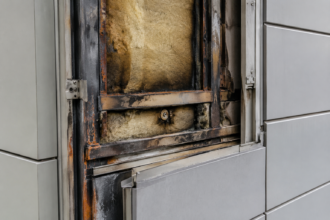
High-rise buildings present unique fire risks due to their height and complexity. The potential for rapid vertical fire spread is a critical concern. Historical fire incidents, such as those in the Grenfell Tower in London, have underscored the dangers of inadequate cladding systems.
These events demonstrated that poorly performing cladding can act as a conduit for fire, compromising the entire structure.
Metal cladding plays a key role in the exterior envelope, influencing both aesthetics and performance. Its fire resistance or lack thereof, can determine the severity of a fire event. The NFPA 285 standard provides a method for evaluating the fire propagation characteristics of non-load-bearing wall assemblies, which is essential for understanding how various cladding systems perform in a fire scenario.
This standard requires a rigorous two-story test to assess flame spread and heat release, providing a realistic simulation of potential fire conditions.
Ensuring that metal cladding meets fire performance standards is not merely a regulatory requirement. It is a fundamental aspect of protecting occupants and preserving property. As such, the emphasis on fire performance in high-rise construction cannot be overstated.
The integration of fire safety measures from the design phase through to installation and maintenance is important for achieving a resilient building envelope.
Overview of Current Fire Performance Codes for Metal Cladding
IBC Section 1406 outlines the fire performance requirements for exterior cladding systems. The recent updates have brought significant changes, reflecting lessons learned from past failures. The new provisions demand stricter testing and documentation to ensure compliance.
One key aspect is the requirement for cladding systems to pass the NFPA 285 test, ensuring they do not contribute to vertical fire spread.
ASTM E119 is another important standard, focusing on fire-resistance ratings of building elements. It evaluates how assemblies withstand fire exposure and maintain structural integrity. This complements the requirements in IBC Section 1406 by ensuring the entire assembly, not just the cladding, meets fire performance criteria.
The ASTM E119 test involves exposing a wall assembly to a controlled fire and measuring its ability to contain the fire and maintain its structural function for a specified period.
The differences between previous and current code requirements are stark. Earlier codes were less prescriptive, often leaving room for interpretation. Now, there’s a clear directive that mandates specific testing and performance outcomes, reducing ambiguity and enhancing safety.
The emphasis on documented compliance and third-party testing provides a more reliable framework for assessing fire performance.
Material Selection and Compliance
Choosing the right metal cladding materials is important for compliance with fire performance codes. Not all materials are created equal and selecting those that meet ASTM E84 standards for surface burning characteristics is essential. This test evaluates the flame spread and smoke development of materials, ensuring they do not exacerbate fire conditions.
Testing and certification processes are rigorous. Materials must undergo thorough evaluation to receive approval, often involving full-scale testing to simulate real-world conditions. Case studies have shown that compliant materials can significantly reduce fire spread and damage, while non-compliant materials have led to catastrophic failures.
For instance, the use of polyethylene cores in aluminum composite materials (ACMs) has been linked to several devastating fires, prompting a shift towards mineral-filled cores that offer improved fire resistance.
One notable example is the use of aluminum composite materials (ACMs). When combined with combustible cores, these have been implicated in several high-profile fires. The shift towards mineral-filled cores, which offer greater fire resistance, illustrates the industry’s response to these challenges.
Understanding the nuances of material performance is important for achieving compliance and safety. Manufacturers are now focused on developing materials that not only meet fire performance criteria but also align with aesthetic and environmental considerations.
Design Considerations for Fire Safety
Fire safety must be integrated into the design phase from the outset. This involves balancing aesthetics with performance, ensuring that the chosen cladding systems do not compromise safety. Collaboration with fire safety engineers is essential to develop designs that meet both architectural and fire performance goals.
NFPA 5000 provides guidance on incorporating fire safety into building design. It emphasizes the need for a complete approach, considering all aspects of the building envelope. This includes the interaction between cladding, insulation and other components to prevent fire spread.
Designers must account for the thermal properties of materials and their behavior under fire conditions to create assemblies that resist ignition and flame spread.
Designers must also consider the impact of fenestration and other openings, which can create points of vulnerability. Ensuring that these elements are properly integrated and tested for fire performance is important. The goal is to create a cohesive system that resists fire spread while maintaining the desired aesthetic appeal.
The use of fire-rated glazing and properly sealed joints can significantly enhance the fire resistance of the building envelope.
Installation Best Practices
Proper installation is critical to achieving the fire performance standards outlined in codes. Even the best materials can fail if not installed correctly. Common pitfalls include improper fastening, inadequate sealing and failure to follow manufacturer guidelines.
Each of these can compromise the integrity of the cladding system.
UL 1709 outlines standards for fire tests of protection materials for structural steel, highlighting the importance of proper installation techniques. Quality control and inspection are paramount. This includes verifying that all components are installed according to specifications and that any potential issues are addressed promptly.
Regular site inspections and adherence to detailed installation procedures are essential for preventing costly mistakes.
Avoiding installation errors requires a commitment to training and oversight. Contractors must be well-versed in both the materials and the relevant codes to ensure compliance. This proactive approach minimizes risks and enhances the overall safety and performance of the building envelope.
Engaging experienced installers who understand the complexities of fire-rated assemblies can make a significant difference in the project’s success.
Navigating Code Compliance and Approval Processes
Achieving code compliance involves more than just selecting the right materials. It requires a thorough understanding of the approval processes and collaboration with local authorities. This includes obtaining necessary permits and ensuring that all documentation is in order.
ICC-ES Evaluation Reports provide a valuable resource for verifying compliance. These reports offer third-party validation of products and systems, simplifying the approval process. However, maintaining accurate records and documentation is essential.
This not only enables compliance verification but also provides a clear audit trail in case of disputes. Detailed documentation of testing, material specifications and installation procedures supports the compliance process and aids in resolving any challenges that may arise.
Working closely with building officials and fire marshals can streamline the approval process. Engaging these stakeholders early and often ensures that all parties are aligned and reduces the likelihood of last-minute complications. This collaborative approach builds a smoother path to compliance.
Regular communication and transparency with authorities can help anticipate potential issues and address them proactively.
Future Trends in Fire Performance for Metal Cladding
The landscape of fire performance for metal cladding is continually evolving. Emerging technologies and materials are paving the way for enhanced fire resistance. Innovations such as intumescent coatings and advanced composite materials offer promising solutions for the future.
Intumescent coatings, for instance, expand when exposed to heat, forming an insulating barrier that protects underlying materials from fire.
Potential future code changes may further tighten requirements, emphasizing the need for ongoing vigilance. Staying informed about these developments is important for maintaining compliance and safety. Sustainability is also playing an increasingly important role, with materials being evaluated not only for fire performance but also for their environmental impact.
The integration of fire safety with sustainable building practices is becoming a key consideration in modern construction.
LEED Fire Safety Credits highlight the intersection of fire performance and sustainability. As the industry moves towards greener building practices, integrating these considerations into fire safety strategies becomes increasingly important. This forward-looking approach ensures that high-rise buildings are both safe and sustainable.
Embracing these trends positions industry professionals to meet future challenges while contributing to a safer built environment.