- Anodized aluminum cladding failures in coastal environments result from treating the finish as a commodity rather than a coordinated performance system.
- Alloy selection is the most overlooked specification variable and undocumented recycled content is a growing source of visible color banding.
- Cold sealing methods are demonstrably inferior for high-UV and marine exposures yet remain common because specifications rarely require sealing method disclosure.
- Accelerated chamber testing per ASTM G155 systematically underpredicts performance degradation in high-UV zones like South Florida and coastal California.
- A coordinated specification requiring mill certifications, sealing method confirmation and sealant compatibility documentation closes the gaps that produce warranty disputes.
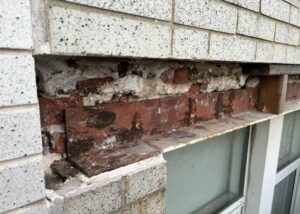
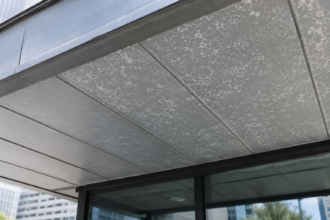
A facade engineer on a 14-story mixed-use tower in Miami’s Brickell district files a warranty claim 18 months after substantial completion. The southwest elevation shows streaked pitting, chalky surface haze and visible color variation between panels from the same fabricator run.
The anodize meets AAMA 611-14 Class I minimums on paper. The problem is that no one specified alloy series, sealing method or post-fabrication handling as a coordinated system and the accelerated weathering data the team relied on came from a controlled chamber, not a marine UV environment.
This failure is not unusual. It is the predictable result of treating anodized aluminum as a commodity finish rather than a system with interdependent performance variables.
What Anodizing Actually Does (and Doesn’t Do) to Aluminum
Anodizing is an electrochemical conversion coating, not an applied film. The process converts the aluminum surface into aluminum oxide (Al₂O₃), making the coating integral to the substrate rather than a separate layer bonded to it.
That distinction matters because it means the coating cannot delaminate the way a paint film can. It also means that damage to the oxide layer is damage to the aluminum itself.
The anodic layer has a porous columnar structure. That porosity is simultaneously the source of the coating’s durability advantage and its primary failure mechanism.
Properly sealed pores resist contaminant ingress. Unsealed or inadequately sealed pores absorb chlorides, pollutants and moisture, which then attack the oxide from within.
Anodizing does not eliminate corrosion risk. It controls it.
Chlorides, alkaline cleaners and condensed moisture can still attack the oxide layer, particularly at cut edges and mechanical fastener penetrations where the conversion coating is absent or compromised. AAMA 611-14 distinguishes between Class II (decorative, 10-micron minimum) and Class I (architectural, 18-micron minimum) anodize.
That distinction gets collapsed in specifications more often than it should. Specifying “anodized aluminum” without a class designation is not a specification.
It is an invitation to receive the cheaper product.
The sulfuric acid bath used in Type II anodizing, the most common architectural process, operates at controlled temperature and current density to produce the columnar pore geometry. Bath temperature drift of even a few degrees Celsius changes pore diameter and wall thickness, which affects both sealing quality and long-term oxide density.
Anodizers running high-volume production lines manage this variation through bath chemistry monitoring, but the specification community rarely asks for process documentation that would confirm those controls were in place for a given production run. Type III hardcoat anodizing, produced at lower bath temperatures and higher current densities, generates a denser oxide layer in the range of 25 to 100 microns, but its surface hardness and optical properties make it unsuitable for most architectural color applications.
The architectural market lives in the Type II range, which means bath process control is the variable that separates a 20-year panel from an 18-month warranty claim.
Why Coastal and High-UV Environments Accelerate Failure
Marine environments introduce chloride ion concentrations that attack the anodic oxide layer through a mechanism distinct from inland atmospheric corrosion. Pitting initiates at pore boundaries and propagates laterally under UV cycling, producing the streaked surface degradation that facade engineers recognize in the field but often misattribute to a manufacturing defect.
The accelerated weathering data problem is real and underacknowledged. ASTM G155 Cycle 1 xenon arc testing does not replicate the spectral distribution of Florida or Southwest U.
S. solar exposure.
The xenon arc source is filtered to approximate global solar radiation, but the UV intensity ratios and thermal cycling profiles in a chamber do not match what a southwest-facing panel in Miami experiences over a Florida summer. Accelerated weathering chambers systematically underpredict chalking and gloss loss rates in high-UV zones.
Specifiers who accept chamber data as proof of coastal durability are reading the test correctly but applying it incorrectly.
Salt fog testing per ASTM B117 compounds the confusion. B117 is a corrosion proxy.
It is not a UV proxy. Citing B117 results as evidence of coastal durability conflates two different degradation mechanisms and produces false confidence in the specification.
The AAMA 2605-17 requirement for 10-year Florida exposure testing for high-performance organic coatings exists precisely because chamber data is insufficient for aggressive environments. No equivalent mandatory real-world exposure protocol exists for anodized finishes under AAMA 611. That gap is where warranty disputes originate.
UV degradation in anodized panels manifests as chalking of the oxide surface and differential fading between panels with slight alloy or bath chemistry variation. The assembly can remain structurally intact while looking like a failure.
In a high-visibility urban location, that distinction provides no practical comfort to the owner.
The geographic specificity of the problem deserves more attention than it typically receives in pre-construction discussions. IECC Climate Zone 1A, which covers Miami-Dade and Broward counties, delivers annual UV doses that are roughly 40 percent higher than Climate Zone 5 conditions in the upper Midwest.
A panel finish validated through chamber testing against a northern European or mid-Atlantic baseline is not validated for South Florida. The same logic applies to coastal California, Hawaii and the Gulf Coast.
Specifiers working in those zones should treat any performance claim derived solely from ASTM G155 data as unverified for their specific exposure condition. Asking fabricators directly whether they have rack exposure data from Homestead, Florida or Phoenix, Arizona is a reasonable and productive question.
The answer or the absence of one, tells you more about the product’s actual performance history than any chamber report.
Alloy Selection: The Variable Specifiers Most Often Ignore
Not all aluminum alloys anodize equally. The 6063-T5 and 6063-T6 alloys are the preferred architectural choices for anodizing because their low copper and iron content produces a consistent, dense oxide layer with predictable color response.
The 5xxx-series alloys and 6061 produce inconsistent color and reduced oxide quality. Specifying “architectural aluminum” without an alloy designation leaves this variable entirely to the fabricator’s material procurement decisions.
Alloy chemistry directly affects anodic layer density, color consistency and corrosion resistance. Panels fabricated from mixed alloy lots within a single project are a documented source of visible color banding that is irreversible post-installation.
The banding is not a fabrication defect in the conventional sense; the anodizer processed each panel correctly. The problem is upstream, in the material sourcing.
Recycled aluminum content introduces alloy variability that is difficult to control at the fabrication level. Sustainability-driven material sourcing without alloy verification is a growing source of finish inconsistency, particularly as projects pursue recycled content credits without requiring the mill certifications that would catch alloy drift.
ASTM B209 covers aluminum and aluminum-alloy sheet and plate, including alloy and temper designation requirements relevant to anodizing suitability. Mill certifications per ASTM B209 should be a required submittal, not an assumption.
If the specification does not require it, the contractor has no obligation to provide it and no incentive to pay for the tighter material controls that consistent anodizing demands.
The copper content threshold is the most consequential alloy variable for anodizing quality. Copper concentrations above approximately 0.1 percent, common in 2xxx-series and some 6061 stock, produce a smutted, non-uniform oxide that anodizers can partially address through pre-treatment chemistry but cannot fully correct.
Iron content above roughly 0.2 percent creates intermetallic particles at the alloy surface that act as pore initiation sites, producing a coarser oxide structure with reduced corrosion resistance. These are not theoretical concerns.
They are the mechanism behind the color banding and accelerated pitting that facade consultants document on projects where alloy verification was skipped. The 6063 alloy specification limits copper to 0.10 percent maximum and iron to 0.
35 percent maximum, with silicon as the primary alloying element. Those limits exist because the alloy was developed with extrusion and anodizing performance in mind.
Substituting 6061, which allows copper up to 0.40 percent, introduces a measurable quality risk that no downstream process step can fully recover. When a project’s sustainability narrative requires recycled aluminum content, the specification should require that recycled content be sourced from identified alloy streams with mill certification confirming 6063 compliance, not simply from post-consumer aluminum scrap of unverified composition.
Anodize Thickness and Sealing: The System Variables That Determine Service Life
Thickness alone does not determine performance. A Class I anodize at 18 microns with inadequate sealing will fail faster in coastal exposure than a properly sealed Class II coating in a benign inland environment.
The specification community’s focus on thickness as the primary quality metric misses the more consequential variable.
Three sealing methods are in common use: hot deionized water sealing, mid-temperature nickel acetate sealing and cold sealing using nickel fluoride-based chemistry. Each produces different pore closure quality.
Hot DI water sealing converts the outer pore structure through hydration, producing a reliable closure that performs well under thermal cycling. Mid-temperature nickel acetate sealing deposits nickel compounds within the pores and is widely regarded as producing equivalent or superior closure to hot sealing with better throughput control.
Cold sealing is demonstrably inferior for high-UV and coastal applications despite its cost and throughput advantages for fabricators. Cold-sealed panels show accelerated pore reopening under UV exposure and thermal cycling, which directly explains chalking and contaminant absorption failures in aggressive environments.
Sealing quality is not reliably captured by thickness measurement alone. The dye stain test per ASTM B136 and the acid dissolution test per ASTM B680 are the appropriate QC methods for sealing verification.
Neither is routinely required in standard specifications. That omission is a direct cause of the failure pattern described at the opening of this article.
Post-fabrication handling adds a third layer of variability. Mechanical abrasion during panel stacking, alkaline mortar splash during installation and incompatible sealant contact can degrade the sealed anodic layer before the building is occupied.
Sealant compatibility is a system-level issue that facade specifications frequently ignore. Silicone sealants with acetoxy cure chemistry release acetic acid during cure and can attack anodized surfaces at joint interfaces.
Neutral-cure silicones must be specified and verified through the sealant manufacturer’s compatibility documentation. For coastal exposures within one mile of tidal water, specify Class I minimum with hot DI water or mid-temperature nickel acetate sealing, require ASTM B680 testing as a submittal and require written sealant compatibility confirmation from the silicone manufacturer.
That combination is not overspecification. It is the minimum defensible standard for the exposure condition.
The ASTM B680 acid dissolution test quantifies sealing quality by measuring the mass loss of a sealed anodic coating when exposed to phosphoric-chromic acid solution under controlled conditions. A well-sealed Class I coating should show mass loss below 30 milligrams per square decimeter.
Cold-sealed panels frequently exceed that threshold, particularly when the cold sealing bath chemistry is not maintained within tight pH and fluoride concentration limits. The test takes less than an hour to run and costs a fraction of what a warranty dispute costs.
Requiring it as a submittal for coastal and high-UV projects is a straightforward risk management decision. The fabricators who object to that requirement are the ones whose process control does not consistently meet the threshold, which is itself useful information during the qualification process.
Cut Edges, Fastener Penetrations and the Water Control Layer
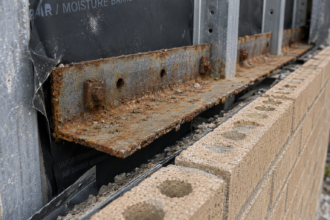
The anodic layer terminates at cut edges. Fabrication cuts, drilled fastener holes and routed joint profiles all expose bare aluminum to the environment.
In a rainscreen assembly with a drained and vented cavity, this matters less than in a face-sealed system because the water control layer behind the panel carries bulk water away before it dwells at exposed metal. But the rainscreen cavity does not protect panel edges from condensed moisture, capillary draw at tight joint conditions or water that enters through failed sealant at penetrations.
Specifying anodized panels without addressing edge treatment is a gap that field conditions will exploit. Anodized aluminum extrusions used as panel frames or sub-framing within the cavity face the same cut-edge vulnerability at field-drilled fastener holes.
Touch-up anodizing is not field-applicable; the electrochemical process requires a controlled bath. Clear anodize-compatible sealants or chromate conversion coatings at cut edges are the practical field response, but neither replicates the performance of an intact anodic layer.
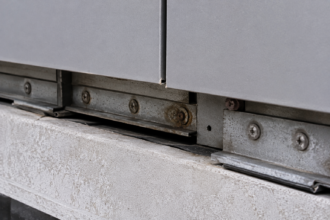
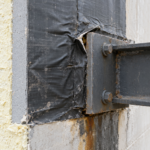
The water control layer in a rainscreen assembly must be continuous and properly integrated with the panel attachment system. Thermal bridging at cladding attachment brackets is a separate concern, but the brackets also create penetrations through the WRB that require proper detailing.
A degraded anodic layer on the panel face does not compromise the water control function of the assembly, but it does create a corrosion pathway that can reach structural fasteners over time if the cavity drainage is inadequate.
The practical specification response to cut-edge vulnerability is to address it in the fabrication section rather than leaving it to installer discretion in the field. Requiring that all shop-fabricated cut edges receive a chromate conversion coating per MIL-DTL-5541 Type II before panel delivery shifts the treatment to a controlled shop environment where application quality can be verified.
Field-drilled holes are harder to control, which is an argument for designing attachment systems that minimize field drilling. Where field drilling is unavoidable, the specification should require that installers apply a zinc-rich primer or anodize-compatible touch-up coating immediately after drilling, before the panel is set.
That requirement is easy to write and difficult to enforce without a site quality plan that includes inspector hold points at panel installation. Facade consultants who include that hold point in their construction administration scope catch the omission before it becomes a warranty issue.
Those who limit their CA role to shop drawing review do not.
Reading Accelerated Test Data Honestly
The specification community needs to be more direct about what accelerated weathering data can and cannot tell us. ASTM G155 xenon arc testing produces comparative data.
It tells you whether finish A performs better than finish B under controlled conditions with a defined spectral distribution. It does not tell you how either finish will perform on a southwest-facing facade in IECC Climate Zone 1A over a 20-year service life.
The absence of a Florida exposure requirement for anodized finishes under AAMA 611 is a genuine standard gap. AAMA 2605-17 requires 10-year Florida exposure for high-performance PVDF coatings because the industry learned through field failures that chamber data was insufficient.
Anodized aluminum has not yet accumulated the same volume of documented field failures in high-UV coastal environments, partly because it has not been specified at the same volume as PVDF coatings and partly because failures have been absorbed as warranty disputes rather than published case studies.
Specifiers who are evaluating anodized aluminum for coastal high-rise applications should ask fabricators for any available Florida or Arizona outdoor exposure data, even informal rack exposure results. The absence of such data is itself informative.
It means the performance claim rests entirely on chamber testing and the Brickell district failure described at the opening of this article is what that gap produces in the field.
The rack exposure question also surfaces a secondary issue: how fabricators document and retain historical performance data. A fabricator who has been producing architectural anodize for 20 years and cannot produce any outdoor exposure documentation has either not been tracking performance or has not been asked.
Both possibilities are relevant to a specifier’s qualification decision. The ASTM G7 practice for atmospheric environmental exposure testing of nonmetallic materials provides a framework for outdoor exposure programs and some fabricators with mature quality systems run ongoing rack exposures at southern Florida and Arizona sites as part of their product development process.
Those fabricators exist, they are not rare and they can be identified by asking the question directly during the product qualification phase. A specifier who includes outdoor exposure data as a required submittal item in the product qualification section of the specification will find that the market contains more suppliers with that data than a specifier who never asks.
Specifying Anodized Aluminum as a System
The failure pattern across coastal anodized aluminum installations is consistent: individual components meet their individual specifications and the assembly fails anyway. The anodize meets AAMA 611-14 Class I thickness.
The alloy is undocumented. The sealing method is cold seal.
The sealant is acetoxy cure. The cut edges are untreated.
No single item triggers a non-conformance; the combination produces a warranty claim at 18 months.
The correction is not a more complex specification. It is a coordinated one.
Require ASTM B209 mill certifications for alloy verification as a submittal. Specify hot DI water or mid-temperature nickel acetate sealing explicitly and require ASTM B680 acid dissolution testing as QC documentation.
Require neutral-cure silicone with written compatibility confirmation from the sealant manufacturer. Address cut edges in the fabrication requirements section, not as an afterthought in the installation notes.
The fabricators who can meet these requirements are not rare. They are simply not selected by specifications that treat anodize as a commodity.
Write the specification to select for system performance and the market will respond accordingly. Write it to select for minimum thickness compliance and you will get minimum thickness compliance, nothing more.
The coordination point that most often falls through the gap between disciplines is the interface between the facade specification and the sealant specification. On projects where the curtainwall or cladding specification is written by the facade consultant and the sealant specification is written by the architect of record from a master specification template, the two documents frequently do not reference each other on the question of anodized aluminum compatibility.
The facade spec requires anodized panels. The sealant spec defaults to a standard silicone without a cure chemistry requirement.
The installer selects the lowest-cost compliant product, which is often an acetoxy-cure silicone. The result is acetic acid contact with the anodized joint edge during the first cure cycle after installation.
That contact does not produce immediate visible damage, which is why it passes inspection. The damage accumulates over the first two to three years as the joint is repeatedly wetted and dried and it appears in the warranty period as edge staining and oxide breakdown that the fabricator correctly identifies as a sealant compatibility issue and the sealant manufacturer correctly identifies as an improper substrate condition.
The owner is left holding a dispute between two parties who are both technically correct. A single cross-reference in the specification requiring the sealant manufacturer to confirm compatibility with the specified anodized finish, documented as a submittal, closes that gap before it opens.