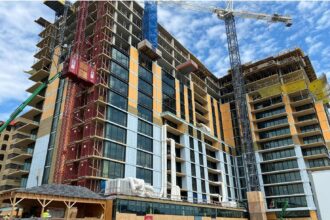
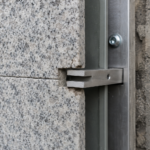

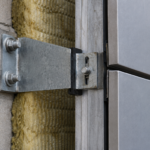
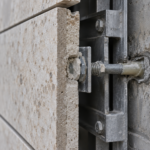
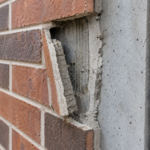
Polished and Textured Concrete Panel Facades: Anchor Embed Design, Thermal Movement Tolerances and Long-Term Structural Risk at the Precast-to-Steel-Frame Interface
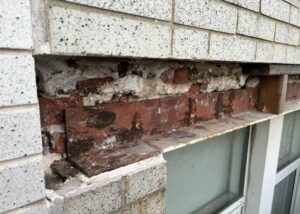
A forensic investigation on a 12-story institutional building in the Upper Midwest: completed in 2017 and clad in polished architectural precast panels: revealed hairline cracking at 23% of anchor embed locations and active water infiltration at the steel spandrel beam interface, all discovered during a routine re-roofing inspection six years after occupancy. No panel had moved visibly.
No alarm had been triggered. The failure was entirely hidden inside the connection zone and the design documents showed full code compliance at the time of permit.
That last detail is the one that should concern every specifier working with precast today.
Why Precast Concrete Panels Are Back: and What the Renewed Specification Cycle Is Missing
Post-Grenfell and post-Champlain Towers, the specification environment shifted hard toward non-combustible cladding. IBC 2021 Section 1404.2 tightened combustibility requirements for exterior wall cladding on Type I and II construction and that single code pressure pushed a significant number of commercial and institutional projects back toward architectural precast after a decade of ACM panel and rainscreen system dominance.
PCI reported increased architectural precast specification activity in the 2022-2023 cycle, concentrated in healthcare and higher education sectors where fire resistance and long-term durability carry outsized weight.
The problem is who is doing the specifying. Architects returning to precast after a long gap or specifying it for the first time, bring strong familiarity with the panel system itself: concrete mix design, surface finish options, reinforcement strategies: but limited institutional knowledge of the interface between that panel and the structural frame.
The panel performs. The connection fails.
These are not the same problem and they do not have the same solution. The specification cycle is producing projects where the material is correctly selected and incorrectly detailed and the failures that result will not surface for years.
What makes this generation of misspecification particularly difficult to catch is that the panel-level decisions are well-supported. Mix design guidance from PCI MNL-120, finish specifications from the Architectural Precast Concrete manual and reinforcement strategies from ACI 318-19 are all accessible and well-understood by the design community.
The connection interface, by contrast, sits in a documentation gap between the structural engineer’s scope, the facade consultant’s scope and the precast fabricator’s engineering. Architects who have not worked through a precast project from shop drawing review to erection inspection do not know that gap exists until something fails.
By then the building is occupied, the warranty period is closing and the connection zone is inaccessible without scaffolding. The specification problem is not ignorance of precast as a material.
It is ignorance of precast as a system and the system includes everything that happens between the back face of the panel and the face of the structural steel.
How Thermal Movement Actually Works Across a Precast-to-Steel Interface: The Physics Designers Underestimate
Steel expands at approximately 6.5 x 10⁻⁶ in/in/°F. Normal-weight concrete expands at approximately 5.5 x 10⁻⁶ in/in/°F.
That differential looks modest in isolation. It does not stay modest across large panel dimensions and wide temperature swings.
In continental climate zones: IECC Climate Zones 5 and 6, covering Chicago, Minneapolis and Denver: facade surface temperatures range from -20°F in winter to +150°F under summer solar gain on a dark polished finish. That is a 170°F operational delta.
Across a 30-foot panel width, the differential movement between the steel frame and the concrete panel at a single connection can exceed 3/16 inch. The ASCE 7-22 commentary on thermal loads acknowledges this range, but most connection calculations are performed at a single assumed temperature or use a compressed delta that reflects interior conditioned space conditions rather than facade surface exposure.
This is the core physics error. The steel frame responds to interior temperatures, which in a conditioned building stay within a 65-75°F band year-round.
The panel surface responds simultaneously to solar gain and ambient air temperature, swinging through that full 170°F range. They are not moving in the same plane, at the same rate or in response to the same thermal environment.
PCI Design Handbook 8th Edition provides thermal coefficient data, but the handbook assumes the designer will apply realistic surface temperature assumptions. Many do not.
ASHRAE 90.1-2022 climate zone data gives the ambient range; facade surface temperatures require a separate solar gain calculation that frequently gets omitted from connection design.
The solar gain calculation is not complicated, but it requires a deliberate step that sits outside the standard structural connection workflow. ASTM E1980 provides a standard practice for calculating solar reflectance index and that value directly informs the surface temperature assumption.
A dark polished concrete finish with a low solar reflectance index will absorb significantly more radiant energy than a light sandblasted finish, producing surface temperatures that can run 40°F to 60°F above ambient air temperature on a clear summer afternoon. A designer who uses ambient air temperature as the panel surface temperature input is systematically underestimating the thermal demand on every connection in the facade.
On a 10-story building with 30-foot-wide panels and 80 connection points, that underestimate is not a rounding error. It is a design condition the connections were never sized to handle.
The error compounds further when the designer uses a single-point temperature assumption rather than the full seasonal range, which eliminates the reversing nature of the thermal demand and prevents any meaningful fatigue analysis from being performed.
Anatomy of the Anchor Embed System: What the Connection Is Actually Being Asked to Do
The connection between an architectural precast panel and a steel frame is not a single structural element. It is a system of discrete connections with distinct load-carrying responsibilities and each type carries a different thermal movement demand profile.
Bearing connections carry gravity loads and are typically located at the bottom of the panel or at a spandrel beam. Tieback connections resist out-of-plane wind and seismic forces and are typically located at the top of the panel.
Alignment connections serve erection only and are not intended as long-term structural elements. Combination connections attempt to carry both gravity and lateral loads at a single point, which concentrates both stress and movement demand.
ACI 318-19 Section 17 governs anchor design in concrete, but it addresses capacity, not the cumulative movement tolerance the anchor must accommodate across its service life.
Slotted holes, oversized holes and Teflon-bearing pads are the three primary mechanisms for accommodating movement at the connection hardware. Slotted holes allow translation in one direction.
Oversized holes allow limited translation in two directions. Teflon-bearing pads reduce friction at bearing surfaces, allowing the panel to slide without transferring restraint forces into the embed.
What none of these mechanisms does on its own is accommodate the full additive demand the connection actually faces: thermal movement, construction tolerance per PCI MNL-135 (which allows plus or minus 3/4 inch on panel location), seismic drift and long-term concrete creep and shrinkage. These demands are additive.
They are rarely summed in practice. The weld or bolt at the frame interface absorbs whatever the design failed to accommodate.
The creep and shrinkage component deserves particular attention because it is time-dependent and unidirectional. A panel cast at 70°F and installed in summer will shrink as it continues to cure and lose moisture over the first three to five years of service.
ACI 209R-92 provides shrinkage prediction models and for a typical architectural precast mix with a water-cement ratio of 0.40 and 28-day strength of 6,000 psi, total long-term shrinkage strain can reach 400 to 600 millionths. Across a 30-foot panel, that translates to approximately 1/8 inch of panel shortening that occurs after the connection is locked in place.
That movement is not reversible, it does not average out across thermal cycles and it is directionally additive to the thermal contraction demand in winter. A connection sized for thermal movement alone, without the shrinkage component, is undersized from the day the building reaches its first winter.
The designer who reviews the ACI 318-19 Section 17 anchor capacity tables and confirms the embed is adequate for gravity and lateral loads has answered a different question than the one the building is actually asking.
Where the Design Process Breaks Down: The Coordination Gap Between Structural Engineer, Facade Engineer and Precast Fabricator
Embed design on a typical precast project is split across three parties with no single accountable owner. The structural engineer of record sizes the embed for gravity and lateral loads.
The precast fabricator’s engineer designs panel reinforcement around the embed. The facade engineer, if retained at all, specifies connection hardware.
Thermal movement tolerance sits at the intersection of all three scopes, which in practice means it belongs to none of them explicitly.
Shop drawing review is the last checkpoint before fabrication locks in the connection geometry. Reviewers are checking dimensional compliance against design documents.
They are not re-analyzing the thermal movement assumptions embedded in the original design calculations. Design-assist delivery, increasingly common on precast projects, can improve coordination but creates liability ambiguity when the fabricator’s engineer of record and the project EOR have overlapping connection responsibilities.
The PCI Architectural Precast Concrete manual (3rd Edition) includes a responsibility matrix for exactly this reason. It is referenced infrequently in actual contract documents.
The most predictable failure pattern from this coordination gap: slotted holes correctly specified in the connection hardware, then field welds added during erection by the steel subcontractor to “stabilize” the connection before the panel crew releases their rigging. The designed movement capacity is eliminated entirely.
The weld holds. For years.
Then it does not.
That field weld scenario is not a fringe event. It surfaces repeatedly in forensic investigations of precast facade failures because it is a rational response to a real erection problem.
The panel crew cannot release their crane pick until the connection is stable and a slotted hole with a snug bolt does not feel stable to an ironworker standing on a spandrel beam in winter. The field weld takes 90 seconds and solves the immediate problem completely.
No one on the site that day is thinking about the thermal cycle that will occur on August 15th of year three. The solution is not to blame the ironworker.
The solution is to specify a connection detail that is stable at erection without requiring the slot to be locked out, which typically means a two-stage connection with a temporary bearing point that transfers load before the final bolted condition is achieved. That detail costs more to engineer and more to fabricate.
It costs less than a forensic investigation and a facade remediation program on a six-year-old building.
The contract document language that would prevent the field weld is straightforward: a note on the connection detail drawing stating that field welding of slotted connections is not permitted without written approval from the EOR, combined with a special inspection requirement for connection hardware under IBC 2021 Section 1705.12. Special inspection at the connection level puts a third-party set of eyes on the erection sequence before the panel conceals the hardware.
Most precast projects do not include this inspection scope. The IBC requires special inspection for anchor installation in concrete under Section 1705.12.
1, but the scope typically covers the embed installation at the precast plant, not the field connection between the embed hardware and the structural frame. That gap in the inspection program is where the field weld lives.
Fatigue, Fretting and the Long Accumulation of Damage: Why Failures Appear Years After Occupancy
Connection fatigue from thermal cycling is a low-cycle, high-strain phenomenon. Each daily temperature cycle imposes a small displacement demand on the weld or bearing surface.
Across 10 to 15 years of service, that accumulates into measurable crack propagation at restrained embed locations or progressive bearing surface degradation at sliding connections.
Fretting corrosion at steel-on-steel bearing surfaces: embed plate against clip angle, for example: produces iron oxide debris that acts as an abrasive. The debris increases friction at the bearing surface, which increases restraint force, which increases stress at the weld toe.
AWS D1.1 sets weld inspection criteria at fabrication and erection, but it does not address in-service fatigue at connections subject to repetitive thermal displacement. No code does.
The designer must account for this explicitly in the original connection design or the connection accumulates damage on a schedule the design never anticipated.
Water infiltration follows the crack path. Once a hairline crack opens at the embed location, the water control layer at the precast-to-steel interface is compromised.
In the Upper Midwest case described at the opening, the steel spandrel beams showed active corrosion at six years of service. The panels showed nothing externally.
The connection zone had been failing incrementally since approximately year two.
The fatigue life calculation for a thermally loaded weld connection requires the designer to treat the connection as a fracture mechanics problem, not a static capacity problem. AWS D1.1 Annex K provides fatigue design provisions for cyclically loaded structures and the stress category assigned to a weld at a connection plate determines the allowable stress range for a given number of cycles.
A fillet weld at a connection plate falls into Category E or E-prime depending on geometry and the allowable stress range at those categories drops sharply with increasing cycle count. A connection that passes a static capacity check under ACI 318-19 Section 17 may be operating above its fatigue-allowable stress range under thermal cycling, particularly if the slot was field-welded and the full thermal displacement is being absorbed as weld strain rather than as bearing surface translation.
The designer who never performs the fatigue check does not know the connection is failing on a predictable schedule. The building owner finds out at year six when the roofer pulls back the flashing.
Galvanic corrosion at dissimilar metal contacts in the connection zone compounds the fretting damage. An embed plate fabricated from ASTM A36 carbon steel in direct contact with a stainless steel hardware component, without an isolating barrier, will corrode preferentially at the carbon steel face.
In a connection pocket that traps water after the sealant at the panel joint degrades, that corrosion can progress to section loss at the embed plate within 10 to 15 years. AISC Design Guide 9 addresses corrosion protection for steel connections and the guidance is directly applicable to embed hardware in precast panel connections.
Specifying hot-dip galvanizing per ASTM A123 on all carbon steel embed components and specifying an isolating tape or coating at dissimilar metal contacts, adds cost at fabrication and eliminates a failure mode that is otherwise essentially guaranteed in a wet connection pocket in a northern climate.
What a Defensible Thermal Movement Calculation Actually Requires
Calculating thermal movement tolerance correctly requires three inputs that are frequently estimated or omitted: actual facade surface temperature range for the project climate and finish color, the differential movement between the panel and the frame across that range and the cumulative additive demand from construction tolerance, seismic drift and long-term concrete movement.
For a dark polished panel in IECC Climate Zone 6, assume a surface temperature range of -20°F to +160°F. Use the full CTE differential between steel and normal-weight concrete per PCI Design Handbook 8th Edition values.
Calculate differential movement at each connection location, not at the panel midpoint. Add the PCI MNL-135 construction tolerance of plus or minus 3/4 inch as a direct additive to the thermal movement demand.
Size slotted holes to accommodate the sum, not the thermal component alone.
Best practice, distinct from code minimum: provide a Teflon-bearing pad at every bearing connection in Climate Zone 5 or colder, regardless of calculated movement. The cost is negligible.
The insurance against restrained thermal movement accumulating as fatigue damage over a 30-year service life is not.
The seismic drift component of the additive demand calculation is frequently the most poorly documented of the three. ASCE 7-22 Section 13.5.3 requires that architectural components, including precast panels, accommodate the design story drift determined from the structural analysis.
For a steel moment frame building in Seismic Design Category C or D, that drift can reach 2% of story height, which on a 13-foot floor-to-floor dimension produces 3.1 inches of relative displacement between the top and bottom connection points of a panel spanning a single story. The connection hardware must accommodate that displacement without transferring the full lateral force into the panel, which would produce in-plane shear cracking in the concrete.
The standard approach is to provide tieback connections with slotted holes oriented vertically to allow the panel to remain plumb while the frame drifts laterally beneath it. That slot orientation is the opposite of the horizontal slot used for thermal movement accommodation, which means a connection designed for seismic drift and a connection designed for thermal movement have conflicting slot orientations.
Resolving that conflict requires either a two-directional slotted connection, an oversized hole with a Teflon pad or a deliberate decision about which demand governs at each connection location. That decision needs to appear in the calculation package, not be left to the fabricator’s engineer to resolve during shop drawing preparation.
The long-term concrete movement component should include both drying shrinkage per ACI 209R-92 and elastic shortening under sustained gravity load. For a panel with significant self-weight carried through the connection to the frame, the elastic shortening of the concrete at the bearing location produces a small but nonzero vertical displacement that is permanent and occurs immediately upon load transfer at erection. Adding the shrinkage prediction, the elastic shortening, the thermal range and the construction tolerance produces a total movement demand envelope that is typically 30% to 50% larger