The Quiet Rise of Building Envelope Litigation
Why Water Intrusion and Facade Failures Are Driving a New Wave of Construction Claims
Water intrusion and facade performance failures are quietly becoming one of the fastest-growing categories of construction litigation. For many owners, what begins as a minor leak or interior stain can evolve into a multi-million-dollar problem requiring extensive investigation, facade access systems, and partial reconstruction of the exterior wall.
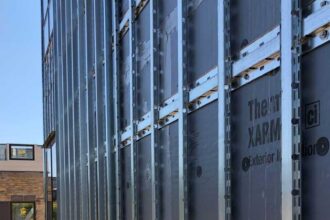
The building envelope is inherently unforgiving. It is the primary environmental barrier separating the interior of a building from wind, rain, temperature extremes, and moisture. When it performs correctly, it receives little attention. When it fails, however, the consequences quickly become visible—to occupants, to owners, and eventually to attorneys.
Over the past decade, disputes tied to envelope performance have increased across commercial, institutional, and multifamily construction. Most of these cases do not involve dramatic structural failures. Instead, they arise from far more common issues: poorly coordinated transitions, drainage systems that cannot drain, undocumented product substitutions, and installation practices that compromise otherwise sound designs.
For architects and building envelope consultants, the trend highlights a growing reality: envelope design is not only a technical discipline. It is also a critical component of construction risk management.
Why Envelope Failures Lead to Litigation
Water intrusion claims often escalate into complex legal disputes because envelope systems involve many participants and many potential points of failure.
Exterior wall assemblies typically combine the work of multiple trades and design disciplines, including facade engineers, window manufacturers, waterproofing installers, roofing contractors, and cladding specialists. When water intrusion occurs, determining responsibility can require extensive forensic investigation.
Unlike many construction defects, envelope failures also tend to affect multiple building systems simultaneously. Moisture entering through the facade can damage insulation, structural framing, finishes, flooring, and mechanical equipment. In occupied buildings, it may also lead to mold concerns, tenant disruption, and lost revenue.
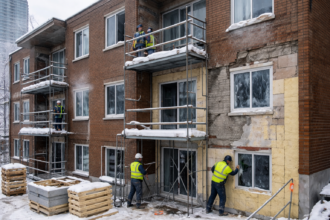
Repair costs can escalate quickly. Accessing the exterior wall of a mid-rise or high-rise building often requires scaffolding, swing stages, or temporary facade removal. In some cases, the cost of gaining access to the envelope exceeds the cost of the original installation.
These conditions make envelope failures particularly likely to generate disputes among owners, contractors, designers, and product manufacturers.
Why Envelope Failures Are Difficult to Diagnose
One of the challenges in resolving envelope disputes is that moisture rarely appears where it enters the building.
Water can travel through insulation layers, framing cavities, or air barrier discontinuities before reaching an interior surface. The location where staining or deterioration becomes visible may be far removed from the actual point of entry.
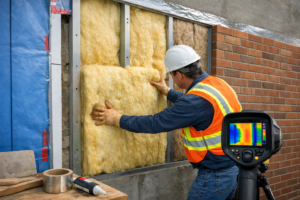
As a result, identifying the source of an envelope leak often requires detailed forensic investigation. Typical methods include moisture mapping, infrared thermography, staged water testing, and selective destructive openings within the wall assembly.
Even with careful investigation, the root cause of a moisture problem may involve multiple contributing factors. Design assumptions, construction sequencing, installation practices, and product compatibility can all influence the final performance of the envelope.
This complexity often turns envelope failures into disputes involving several parties and competing technical opinions.
The Most Common Sources of Envelope Litigation
Although every project is unique, most building envelope lawsuits arise from a handful of recurring issues.
Transition Detailing Failures
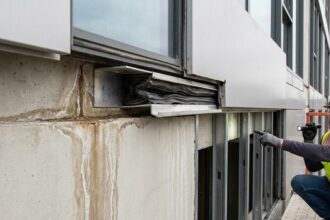
Transitions between envelope systems—such as windows, curtain walls, roofing interfaces, balconies, and foundation connections—are among the most common sources of water intrusion.
These locations require continuity between several control layers:
- Water-resistive barriers
- Air barriers
- Flashing systems
- Drainage planes
Even when individual components are well designed, problems can occur if these systems are not coordinated across disciplines. Window installers may assume flashing responsibilities belong to the wall contractor. Roofing details may not align with facade shop drawings. Balcony penetrations may interrupt drainage paths.
In litigation, these failures often reveal gaps in coordination or unclear assignment of responsibility for critical interfaces.
Drainage Systems That Cannot Drain
Many contemporary wall systems rely on rainscreen principles. Cladding is designed to shed most water while allowing a small amount of moisture to enter a drainage cavity behind the exterior surface.
For these systems to function correctly, several conditions must be maintained:
- Continuous drainage cavities
- Properly sloped flashing components
- Unobstructed weep paths
- Compatible air barrier transitions
During construction, insulation placement, framing tolerances, or installation sequencing can inadvertently block these drainage paths. When water becomes trapped within the wall assembly rather than draining to the exterior, deterioration of concealed materials can begin.
Because these conditions are hidden behind the finished facade, problems may not become visible until long after the building is occupied.
Sealant and Joint Failures
Sealants are often treated as the primary defense against water intrusion even though they are among the least durable elements of the envelope.
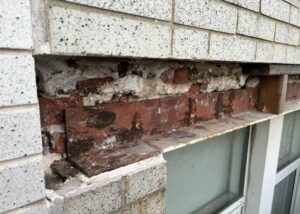
Joint design, substrate compatibility, surface preparation, and installation quality all influence sealant performance. When joints are undersized, poorly prepared, or exposed to excessive movement, sealants may fail prematurely.
Once this occurs, water can bypass the joint and reach underlying materials that were never intended to function as the first line of defense.
In many disputes, questions arise about whether the root cause was joint design, product selection, or installation practices.
Product Substitutions That Alter Tested Assemblies
Product substitutions are another frequent contributor to envelope litigation.
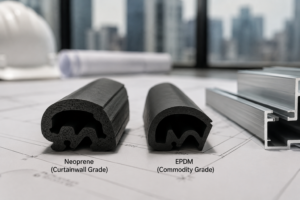
Substitutions are often proposed to reduce cost, address supply chain constraints, or accommodate contractor preferences. While these changes are common in construction, problems arise when replacement products are approved without evaluating how they affect the overall assembly.
Facade systems are frequently validated through laboratory testing that includes specific combinations of materials, including:
- Air barrier membranes
- Insulation types
- Sealants
- Fasteners and attachment systems
- Flashing materials
Many of these tests evaluate the performance of an integrated assembly rather than individual components. When one element is replaced, the tested performance of the system may no longer apply.
In disputes, one of the central questions often becomes whether the installed system actually matches the configuration that was tested.
Installation Quality: The Weakest Link
Even well-designed assemblies can fail if installation practices are inconsistent.
Envelope construction requires careful sequencing among several trades. Air barrier systems, flashing components, windows, insulation, and cladding must be installed in a precise order to maintain continuity of the environmental control layers.
If sequencing is disrupted or components are installed out of order, the integrity of these layers may be compromised before they are protected by subsequent construction.
Common installation issues identified in litigation include:
- Incomplete air barrier continuity
- Fasteners penetrating critical membranes
- Improper flashing slopes
- Missing or obstructed weep systems
- Sealants installed outside manufacturer tolerances
Because many of these conditions are concealed once the facade is complete, disputes often rely heavily on field observation records, photographs, and construction documentation.
Documentation and the Chain of Responsibility
In many envelope disputes, the technical failure is only part of the problem. Equally important is determining how decisions were documented during design and construction.
Submittal approvals are sometimes misunderstood as confirmation of performance compatibility. Requests for information may alter details originally intended by the design team. Field modifications may be implemented without clear documentation of responsibility.
When moisture failures occur years later, investigators often attempt to reconstruct the decision-making process through project records. Incomplete documentation can make it difficult to determine whether the problem originated in design, product selection, or installation.
For design professionals, maintaining clear records of reviews, approvals, and field observations is an important part of managing risk.
Why Litigation Is Increasing
Several broader industry trends are contributing to the rise in envelope-related disputes.
Facade systems are becoming larger and more complex as buildings pursue higher energy performance and architectural expression. As assemblies grow more sophisticated, the margin for error becomes smaller.
At the same time, climate conditions are placing greater stress on building envelopes. More intense rainfall, stronger wind events, and wider temperature swings can expose weaknesses in assemblies that might previously have gone unnoticed.
Multifamily residential construction has also expanded rapidly in many regions. These projects often involve repetitive facade systems installed under tight schedules, increasing the importance of consistent detailing and quality control.
Finally, insurers and lenders are paying closer attention to envelope failures because they can generate large, multi-party claims involving repair costs, business interruption, and liability disputes.
Managing Envelope Risk
While envelope litigation is increasing, many of the underlying causes are well understood.
Several practices consistently reduce risk on complex projects.
Early involvement of building envelope consultants can help identify difficult transitions, material compatibility concerns, and constructability challenges during schematic design.
Full-scale performance mock-ups allow design teams to test interfaces between systems under controlled conditions before construction begins.
Careful evaluation of product substitutions helps ensure that replacement materials maintain the tested performance of the original assembly.
Finally, consistent field quality assurance during construction helps identify installation problems before they become concealed behind finished cladding.
These measures cannot eliminate risk entirely, but they significantly reduce the likelihood that small problems will develop into major failures.
The Envelope as a Risk Boundary
The building envelope sits at the boundary between interior and exterior environments. Increasingly, it also sits at the boundary between acceptable project risk and costly liability.
As facade systems grow more complex and climate stresses intensify, the performance expectations placed on the envelope continue to rise. At the same time, cost pressures and construction speed often leave little margin for error.
For architects and building envelope consultants, this means envelope performance must be approached not only as a technical challenge but also as a risk management discipline.
When failures occur, the consequences extend far beyond water stains on drywall. They can shape the financial outcome of an entire project—and the legal exposure of the teams responsible for its design and construction.
Understanding the causes behind the quiet rise in building envelope litigation is the first step toward preventing the next case.