Facade Fires Are Forcing a Global Re-Evaluation of Cladding Systems
Over the past decade, several catastrophic high-rise fires have exposed a critical weakness in how exterior wall systems are evaluated for fire performance. In multiple incidents around the world, facade assemblies that met code requirements—and in some cases passed laboratory testing—were shown to support rapid vertical flame spread once installed on real buildings.
These events have triggered a global reassessment of cladding system design. Regulators, insurers, and building owners are increasingly questioning the fire behavior of multi-layer facade assemblies, particularly those that incorporate combustible components or ventilated cavities.
For facade engineers, architects, and building envelope consultants, the implications are significant. Materials and assemblies that were widely accepted only a decade ago are now subject to greater scrutiny, and the professional standard of care around cladding fire performance is evolving.
This shift is not simply about banning certain products. It reflects a broader recognition that exterior wall fire behavior depends on the interaction of multiple materials, detailing strategies, and installation conditions—not just the performance of individual components in isolation.
Why Modern Facades Changed the Fire Equation
Several trends in contemporary building design have unintentionally increased the complexity of facade fire performance.
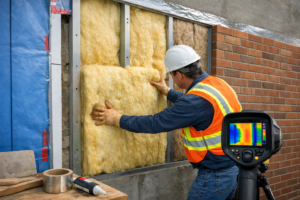
Energy codes have driven the widespread use of continuous exterior insulation, often increasing the thickness and extent of materials installed outside the primary structural wall. At the same time, ventilated rain-screen systems have become common because they improve moisture management and durability. These systems typically incorporate air cavities behind the cladding to promote drainage and drying.
Architectural preferences have also shifted toward lightweight panelized cladding systems—such as metal composites, high-pressure laminates, and engineered decorative panels—that can be installed quickly and provide a wide range of aesthetic options.
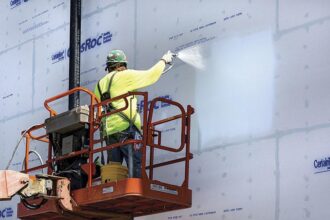
Individually, these design strategies can perform well. However, when combined, they create multi-layer assemblies that include insulation, membranes, attachment systems, air cavities, and cladding panels. During a fire event, the interaction between these layers can produce behavior that is very different from what small-scale material tests predict.
The result is that facade fire performance has become a system-level issue rather than simply a question of individual material ratings.
How Exterior Wall Fires Spread
Most large facade fires share a similar progression. A fire begins inside the building and eventually breaks through a window opening or damaged portion of the exterior wall. Once flames exit the building, they can impinge directly on the facade assembly above.
Several features common to modern cladding systems can contribute to rapid vertical fire spread.
Combustible insulation or cladding cores.
Some facade materials incorporate polymer-based components. Under high temperatures, these materials can ignite, melt, or contribute additional fuel to the fire.
Ventilated rain-screen cavities.
Air gaps designed for moisture management can act as vertical channels that allow flames and hot gases to travel upward. In extreme cases, this “chimney effect” accelerates fire spread from floor to floor.
Window and spandrel interfaces.
The areas immediately above window openings are particularly vulnerable because flames exiting a broken window naturally rise along the facade surface.
Continuous cavities without fire barriers.
If horizontal fire stops or cavity barriers are not present—or are improperly installed—flames may move rapidly through concealed spaces behind the cladding.
Importantly, these mechanisms typically involve the interaction of multiple components rather than the failure of a single product.
Lessons From High-Profile Facade Fires
While facade fires have occurred for decades, several high-profile incidents in recent years dramatically increased public and regulatory attention.
The 2017 Grenfell Tower fire in London became a defining event in the global conversation about cladding fire safety. The fire spread rapidly up the exterior of the building, drawing attention to the role that certain cladding configurations can play in vertical flame propagation.
Other fires in cities such as Dubai, Melbourne, and Seoul have also highlighted vulnerabilities in exterior wall assemblies. In many of these cases, aluminum composite panels with combustible cores were installed in configurations that allowed fire to spread along the building facade.
These events demonstrated an important point for designers: even when individual products meet established testing standards, the complete facade assembly may behave very differently under real fire conditions.
A Global Shift Toward More Conservative Regulation
In response to these incidents, several countries have introduced stricter controls on combustible materials used in exterior wall systems.
Common regulatory changes include:
Restrictions on combustible cladding in tall buildings.
Some jurisdictions now prohibit certain materials above specific height thresholds or in residential high-rise buildings.
Greater reliance on large-scale facade fire testing.
Rather than evaluating materials individually, regulators increasingly require full-scale system testing to demonstrate acceptable fire performance.
Expanded requirements for cavity barriers.
Horizontal and vertical fire stops within ventilated rain-screen assemblies are receiving greater attention.
Remediation programs for existing buildings.
Several countries have initiated large-scale programs to remove or replace high-risk cladding systems on existing structures.
While regulatory approaches vary, the overall direction is clear: facade fire safety is being addressed more conservatively, particularly for taller buildings.
Implications for North American Codes
The United States and Canada already include provisions intended to limit fire spread in exterior wall systems. For many combustible cladding assemblies on multi-story buildings, compliance often involves demonstrating acceptable performance through system-level testing such as NFPA 285.
However, the global scrutiny surrounding facade fires is influencing ongoing code discussions and professional practice in North America.
Areas of particular focus include:
- The range of assemblies required to undergo full-scale testing
- The treatment of exterior insulation materials in tall buildings
- The design of ventilated rain-screen cavities and fire barriers
- Documentation of tested assembly configurations during construction
Even in jurisdictions where codes have not significantly changed, project teams are encountering increased scrutiny from owners, insurers, and code officials when combustible facade components are proposed.
As a result, many design teams are adopting more conservative cladding strategies to reduce uncertainty and long-term liability.
Materials Commonly Associated With Facade Fire Risk
The discussion around facade fire safety often focuses on certain material categories that have been involved in past incidents or require careful configuration.
Aluminum composite panels with combustible cores.
Panels containing polyethylene or similar cores can contribute fuel to a fire when used in certain configurations.
Exterior insulation systems using polymer-based foam.
Foam insulation can perform safely within tested assemblies but may present risks if used outside approved configurations.
Decorative panels containing resin-based laminates.
High-pressure laminates and similar products may contribute to flame spread depending on the overall system design.
Timber facade elements.
As engineered wood products become more common in exterior wall design, their fire performance requires careful consideration and compliance with evolving code provisions.
In most cases, these materials remain code-compliant when installed as part of properly tested assemblies. The key issue is not simply the presence of a material, but whether the entire facade system has demonstrated acceptable fire behavior.
The Limits of Small-Scale Material Testing
One lesson repeatedly reinforced by facade fire investigations is that small-scale material tests cannot fully predict the behavior of complex wall assemblies.
Tests that measure flame spread or heat release from individual materials provide useful information, but real facade systems involve multiple interacting components. Insulation layers, air cavities, attachment systems, and cladding panels can combine in ways that change how fire spreads.
For this reason, many codes require full-scale assembly testing for certain configurations. These tests evaluate how an entire exterior wall system performs when exposed to fire conditions that simulate flames exiting a window opening.
Even then, field conditions must closely match the tested configuration. Changes to insulation thickness, support rails, cavity geometry, or fire stopping details can alter the assembly’s behavior.
For facade consultants, verifying that the project design aligns with a tested assembly has become an increasingly important part of risk management.
Design Strategies for Managing Facade Fire Risk
As the industry reassesses exterior wall fire performance, several design strategies are becoming more common on high-rise projects.
Use of noncombustible cladding materials.
Metal panels, terracotta, fiber cement, and other noncombustible materials reduce the available fuel within the facade assembly.
Careful detailing near window openings.
Window heads and spandrel zones are critical locations where flames may exit the building and ignite exterior materials.
Incorporation of robust cavity fire barriers.
Horizontal fire stops interrupt vertical flame spread within ventilated rain-screen cavities.
Alignment with tested system configurations.
Maintaining consistency with validated assemblies helps ensure expected fire performance.
These strategies do not eliminate risk entirely, but they significantly reduce the likelihood of rapid facade fire propagation.
Common Mistakes in Cladding Fire Design
Despite growing awareness, several recurring issues still appear in facade design and construction.
Evaluating materials independently rather than as a system.
Facade fire behavior is driven by the interaction of multiple components.
Allowing substitutions that alter tested configurations.
Changes in insulation, support rails, or cladding panels can affect fire performance.
Underestimating the role of cavity geometry.
Ventilated assemblies must be carefully detailed to control vertical flame spread.
Insufficient coordination between disciplines.
Architectural, structural, and fire-protection decisions often intersect at the facade.
Addressing these issues early in the design process can prevent costly redesigns or remediation later.
What This Means for Design Teams
The growing focus on facade fire safety is changing how exterior wall systems are evaluated during design and construction.
Design teams should expect:
- Greater scrutiny of cladding systems during code review
- Increased questions from insurers and building owners
- Closer examination of tested assembly documentation
- Reduced tolerance for undocumented substitutions during construction
As a result, facade fire performance is becoming a central consideration in envelope design—alongside energy efficiency, moisture control, and durability.
Conclusion
Facade fires have reshaped the global conversation around cladding systems. What was once treated primarily as an architectural or energy-performance decision is now widely recognized as a critical life-safety issue.
Regulators, insurers, and building owners are responding by demanding greater certainty about how exterior wall assemblies behave during fire events. This is leading to stricter regulations in some jurisdictions, more conservative material selections in others, and increased scrutiny of installation practices across the industry.
For architects, facade engineers, and building envelope consultants, the key lesson is clear: exterior wall fire safety must be evaluated at the system level, with careful attention to materials, detailing, testing, and real-world construction conditions.
As building envelopes continue to evolve, managing facade fire risk will remain a fundamental part of designing durable, resilient buildings.