Why Water Intrusion Is Still the #1 Cause of Construction Litigation
Despite decades of building science research and significant improvements in materials, water intrusion remains the single most common driver of building envelope litigation. From new high-rise facades to low-rise multifamily developments, moisture-related failures continue to generate costly disputes between owners, architects, contractors, and product manufacturers.
This persistence is not due to a lack of knowledge. The industry understands how water moves through building assemblies, how drainage planes should function, and how interfaces must be detailed. The problem is that modern buildings are increasingly complex, construction schedules are compressed, and envelope systems are less forgiving of small errors.
As a result, even minor detailing mistakes or installation deviations can produce major water intrusion failures. When that happens, the consequences are rarely limited to localized repairs. Water infiltration can trigger extensive interior damage, mold concerns, operational disruptions, and multi-party legal disputes that last for years.
For building owners and envelope consultants, understanding why these failures continue to occur is essential to managing risk.
The High Cost of Water Intrusion Failures
Water intrusion is uniquely destructive because it rarely remains isolated. Once moisture enters an assembly, it can migrate through wall cavities, floor systems, and interior finishes before the source is discovered.
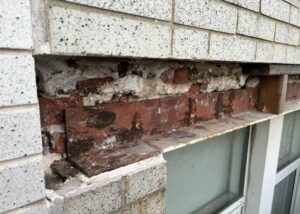
By the time visible symptoms appear—staining, mold growth, or interior leaks—the underlying problem may have existed for months or even years. Remediation frequently requires removal of large sections of cladding, insulation, air barriers, and interior finishes to locate and repair the failure.
From a legal standpoint, this makes envelope-related disputes especially complex. Determining responsibility often involves multiple parties:
- The architect who detailed the assembly
- The contractor responsible for installation
- Subcontractors installing waterproofing or cladding systems
- Manufacturers whose products are involved
- Consultants who may have reviewed the design
Because water intrusion failures often involve interfaces between systems, liability is rarely clear-cut. Litigation frequently becomes a dispute over which party’s work allowed water to bypass the intended drainage or barrier system.
Modern Facades Are More Complex Than Ever
One of the most important drivers of litigation risk is the increasing complexity of modern building envelopes.
Contemporary facades often include multiple interacting layers:
- Continuous insulation systems
- Fluid-applied or sheet air barriers
- Rainscreen cladding systems
- Window wall or curtain wall assemblies
- Integrated flashing systems
- Structural backup walls
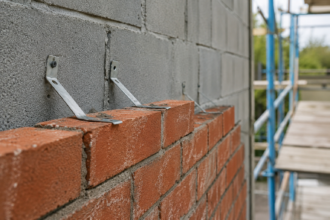
Each layer serves a different function—thermal control, air control, water management, or structural support. In theory, this layered approach creates highly resilient assemblies.
In practice, it also creates more interfaces where failures can occur.
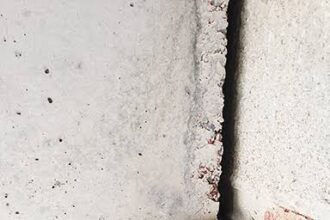
Many envelope leaks do not originate from large design flaws but from small discontinuities at transitions. Typical examples include:
- Window-to-wall interfaces
- Balcony penetrations
- Parapet transitions
- Roof-to-wall connections
- Changes in cladding systems
These are the locations where water management strategies must transition between systems installed by different trades. If continuity of the air barrier, water barrier, or flashing system is compromised at these points, water can enter the assembly despite otherwise sound design.
Tighter Buildings Mean Less Tolerance for Error
Energy codes and sustainability goals have pushed the industry toward significantly tighter building envelopes. Continuous air barriers, improved insulation strategies, and reduced air leakage are now standard expectations for commercial construction.
While these improvements provide clear benefits for energy performance, they also reduce a building’s ability to tolerate moisture intrusion.
Older, leakier buildings often allowed incidental moisture to dry relatively quickly due to air movement through assemblies. Modern airtight buildings trap moisture more effectively when water penetrates the envelope.
This can lead to several unintended consequences:
- Slower drying of wall assemblies
- Increased risk of concealed mold growth
- Accelerated deterioration of structural components
- Greater damage before leaks become visible
In other words, once water gets inside a high-performance envelope, it tends to stay there longer.
For owners, that means small leaks can evolve into significant failures before they are detected. For design and construction teams, it means the margin for error has narrowed substantially.
Compressed Construction Schedules Increase Installation Risk
Even well-designed envelope systems can fail if installation is rushed or poorly coordinated.
Construction schedules on large commercial projects have become increasingly aggressive. Trades often work simultaneously on overlapping portions of the building enclosure, and sequencing is frequently driven by schedule pressure rather than optimal installation order.
This environment increases the likelihood of several common problems:
- Incomplete flashing installation before cladding is installed
- Air barrier discontinuities at trade interfaces
- Improper curing time for liquid-applied membranes
- Damage to installed waterproofing by subsequent trades
Envelope systems are particularly sensitive to sequencing issues because many critical components become concealed once the facade is closed.
If a flashing or air barrier connection is missed, it may not be discovered until water intrusion occurs—often long after the building is occupied.
At that point, determining what happened during construction becomes difficult, especially when documentation is incomplete.
Many Failures Occur at System Transitions
A consistent theme in envelope litigation is that failures rarely occur within the field of a system. Instead, they tend to occur at transitions.
Examples include:
- Window head and sill flashings
- Curtain wall perimeter conditions
- Penetrations for balconies or mechanical systems
- Parapet caps and coping conditions
- Roof-to-wall transitions
These locations require careful detailing to maintain continuity of the drainage plane and air barrier.
Unfortunately, transition details are often simplified during design or left partially unresolved until construction. Contractors may also reinterpret these details in the field to address constructability challenges.
Without clear coordination between design intent and field conditions, the risk of water intrusion increases significantly.
Documentation and Responsibility Often Become Central Legal Issues
When envelope failures lead to litigation, the dispute frequently focuses on documentation and responsibility.
Key questions often include:
- Were the design details adequate and clearly communicated?
- Did the contractor install the system in accordance with the documents?
- Were manufacturer requirements followed?
- Were deficiencies identified during construction and properly addressed?
Construction records, shop drawings, field reports, and testing documentation can become critical evidence in these cases.
In many disputes, the absence of clear documentation makes it difficult to determine exactly when and how the failure occurred. This uncertainty can prolong litigation and expand the number of parties involved.
Why Owners Are Increasingly Turning to Envelope Commissioning
Because of the high cost of envelope failures, many owners are adopting more rigorous quality assurance strategies during design and construction.
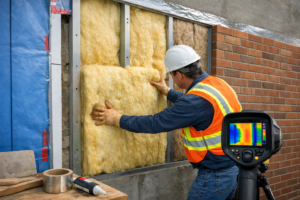
Building envelope commissioning is becoming an increasingly common approach to managing risk. Commissioning processes typically include:
- Peer review of envelope design documents
- Verification of critical detailing at system transitions
- Field observation of installation practices
- Mock-up testing of facade assemblies
- Performance testing of completed systems
These measures do not eliminate risk entirely, but they significantly improve the likelihood that issues will be identified before the building is enclosed.
For owners, the cost of commissioning is often small compared to the potential cost of large-scale water intrusion remediation.
The Industry Knows How to Prevent Most Failures
Perhaps the most frustrating aspect of water intrusion litigation is that most failures are preventable.
Building science has long established the principles necessary for effective water management:
- Provide a continuous drainage plane
- Design redundant flashing systems
- Maintain continuity of the air and water barriers
- Allow assemblies to dry when incidental moisture occurs
When these principles are applied consistently—and when installation is properly verified—water intrusion problems become far less likely.
The challenge is ensuring that these concepts survive the transition from design documents to field installation.
Conclusion
Water intrusion remains the leading cause of building envelope litigation not because the industry lacks knowledge, but because modern construction environments amplify small mistakes.
More complex facades, tighter building envelopes, and accelerated construction schedules have created conditions where minor discontinuities can produce significant failures.
For owners and envelope professionals, managing this risk requires more than good design. It requires careful coordination between design teams, contractors, and quality assurance professionals throughout the project lifecycle.
When that coordination breaks down, water almost always finds the weakest point in the envelope—and the legal consequences can be substantial.