Nanotechnology in the Building Envelope: Are Advanced Coatings and Aerogels Ready for Prime Time?
Electrification mandates, net-zero carbon targets, and increasingly constrained urban sites are pushing building envelope design into uncomfortable territory. Designers are being asked to deliver higher R-values in thinner assemblies, reduce facade maintenance costs, and lower operational carbon—often simultaneously.
Into that pressure zone steps nanotechnology.
Silica aerogel insulation blankets, nano-enhanced hydrophobic coatings, and photocatalytic “self-cleaning” surfaces are being positioned as breakthrough solutions. Laboratory data show exceptional thermal performance, reduced soiling, and improved water resistance at thicknesses previously considered unattainable.
But envelope performance is not determined in a laboratory. It is determined at transitions, interfaces, fasteners, UV-exposed surfaces, and in year 12 of service—not year one.
The central question for architects and enclosure consultants is not whether nanomaterials can work. It is whether they are sufficiently understood, field-validated, and compatible with real-world construction tolerances to be specified at scale.
Silica Aerogel Blankets: Solving the Thickness Problem
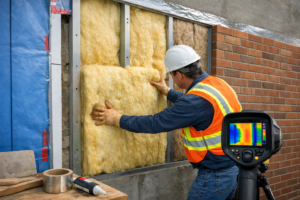
Silica aerogel blankets are often described as the most compelling nanotechnology currently entering the envelope market. With R-values approaching R-10 to R-12 per inch, they significantly outperform conventional mineral wool or polyisocyanurate at equivalent thickness.
In urban retrofit conditions—where setbacks, property lines, and historic façades restrict outward expansion—this matters.
Where Aerogels Provide Real Value
Aerogel blankets are particularly compelling in:
- Historic masonry retrofits where interior insulation depth is limited
- Curtainwall spandrel zones with tight cavity constraints
- Balcony and slab edge thermal break improvements
- Parapet and transition details where continuous insulation is geometrically difficult
In these applications, even one additional inch of assembly thickness may be unacceptable. Aerogels can deliver higher effective R-values without altering facade alignment or triggering zoning implications.
The Practical Concerns
However, several durability and constructability questions remain:
Compression sensitivity. Aerogel blankets derive performance from their highly porous structure. Compression during installation—especially behind cladding attachments or girts—can reduce effective R-value. Field tolerances matter.
Moisture exposure. Most aerogel blankets are hydrophobic, but bulk water intrusion can still affect performance and drying behavior. Long-term wet-dry cycling data are limited compared to mineral wool systems.
Fastener thermal bridging. When assemblies become thinner, the impact of mechanical attachments increases proportionally. A high-R thin insulation layer can be undermined by poorly designed attachment strategies.
Cost sensitivity. Aerogels remain significantly more expensive per square foot than conventional insulation. That cost must be justified by geometry constraints—not simply performance ambition.
Aerogels are not inherently risky. But they are not a universal upgrade. They are a surgical solution to a geometric problem.
Nano-Enhanced Hydrophobic Coatings: Water Resistance vs. Vapor Dynamics
Nanotechnology is also entering the envelope through hydrophobic surface treatments designed to repel water while maintaining vapor permeability. These are often marketed for masonry, concrete, and facade restoration projects.
The promise is attractive: reduced water absorption, freeze-thaw durability improvement, and extended facade life without altering appearance.
The Critical Question: What Happens to Vapor?
Water repellency is not the same as vapor permeability. Some nano-enhanced coatings alter surface energy in ways that reduce liquid water penetration while maintaining vapor diffusion. Others unintentionally shift drying potential.
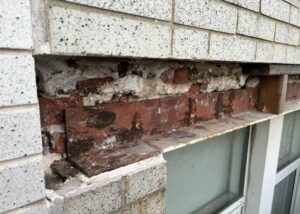
In existing masonry buildings—especially solid wall construction—drying capacity is often the only mechanism preventing long-term moisture accumulation. Introducing a treatment that subtly alters vapor dynamics can create risk.
Envelope consultants should evaluate:
- Published ASTM E96 vapor permeance data before and after treatment
- Long-term freeze-thaw testing under treated conditions
- Field studies beyond accelerated laboratory exposure
- Compatibility with existing sealants and air barrier transitions
If a coating changes the hygrothermal balance of the wall, even slightly, the consequences may not appear for years.
Photocatalytic “Self-Cleaning” Facades: Marketing vs. Maintenance Reality
Titanium dioxide–based photocatalytic coatings are promoted as self-cleaning, pollution-resistant, and even air-purifying. Under UV exposure, they create reactive surfaces that break down organic contaminants.
The appeal to owners is obvious: reduced facade cleaning cycles and lower long-term maintenance costs.
What the Field Data Suggest
In practice, performance depends on:
- Adequate UV exposure
- Regular rainfall to rinse degraded particles
- Surface orientation and local pollution characteristics
North-facing elevations, deep urban canyons, and areas with limited rainfall often show less dramatic results than laboratory demonstrations.
Additionally, photocatalytic surfaces can increase surface hydrophilicity. That can assist in washing but may alter staining patterns. Uniformity across facade zones is not guaranteed.
From a risk standpoint, the issue is not whether photocatalysis works. It is whether lifecycle maintenance assumptions are being overstated relative to real-world exposure conditions.
UV Stability and Degradation Mechanisms
Nanomaterials frequently rely on engineered microstructures or chemical surface modifications. These structures are often optimized for thermal or surface performance—but long-term UV resistance can be an afterthought.
Questions consultants should be asking:
- What is the documented UV exposure duration in testing protocols?
- Were samples tested under full-spectrum UV or accelerated laboratory lamps?
- Is performance retention documented at 5, 10, or 15 years equivalent exposure?
Unlike mineral wool or concrete, nano-engineered surface chemistries may degrade in ways that are not visually apparent but materially significant.
Without 15–20 year field data, long-term performance predictions remain partially extrapolated.
Fire Performance Considerations
Advanced insulation systems cannot be evaluated solely on R-value.
Silica aerogels themselves are inorganic and non-combustible. However, composite blankets often incorporate reinforcing fibers or binders that affect fire performance. Fire classification must be evaluated at the assembly level—not simply the material level.
Similarly, nano-enhanced coatings applied to substrates can alter flame spread characteristics or smoke development in subtle ways.
In curtainwall spandrel applications or exterior insulation systems, fire propagation risk must be reviewed in accordance with NFPA 285 where applicable. The presence of a novel material may alter tested configurations.
Fire testing data should match the proposed assembly—not a similar one.
Compatibility with Air Barriers and Sealants
High-performance envelopes depend on continuity. Introducing a nano-enhanced coating or ultra-thin insulation layer at a transition detail can disrupt compatibility with:
- Fluid-applied air barriers
- Sealant adhesion
- Flashing membranes
- Primer systems
Surface energy modification—especially with hydrophobic coatings—can impair sealant bond strength if not evaluated in advance.
Mockups should include compatibility testing at interfaces, not just isolated product evaluation.
This is where innovation most often fails: not in material science, but at transitions.
Installation Sensitivity and Field Quality Control
Many nanomaterial-based systems are less forgiving than conventional assemblies.
Aerogel blankets require careful handling to prevent compression or tearing. Thin coatings require uniform coverage to achieve stated performance. Surface preparation becomes critical.
Small deviations in installation thickness or coverage can disproportionately affect performance because these materials operate at microstructural scales.
Field quality control protocols should include:
- Verified coverage rates
- Compression limits
- Surface preparation documentation
- Mockup-based validation before production installation
Innovation increases sensitivity. It rarely increases tolerance.
Warranty Language and Performance Gaps
Warranty documents for advanced materials often focus on product defects—not performance retention.
Consultants should review:
- Does the warranty cover thermal performance degradation?
- Is hydrophobic performance guaranteed for a defined duration?
- Are UV-related losses excluded?
- Is labor included or material-only replacement?
If performance benefits drive specification, those benefits should be explicitly covered—or at least clearly acknowledged as non-warranted characteristics.
Warranty clarity is particularly important when owners are expecting maintenance savings to justify higher initial costs.
Where Nanomaterials Make the Most Sense
Nanotechnology in the envelope is not inherently speculative. It is context-dependent.
Strong use cases include:
- Historic retrofits with thickness constraints
- High-value facade zones where minor geometry adjustments are unacceptable
- Targeted thermal bridge mitigation at slab edges and parapets
- Research-driven or performance-monitoring pilot projects
- Situations where operational carbon reduction justifies premium material cost
In these scenarios, the performance gain addresses a real design constraint—not simply incremental improvement.
Where Caution Is Warranted
Consultants should be more conservative when:
- Assemblies depend on long-term hygrothermal balance in mass masonry
- Fire performance relies on tested configurations that do not include nano-enhanced products
- Projects assume major maintenance cost reductions without field data
- Owners expect 20+ year durability without documented field history
The gap between laboratory performance and field durability remains the central concern.
Are Aerogel Insulation and Nano-Coatings Safe to Specify?
They can be.
But they should be specified with the same rigor applied to any new envelope system:
- Assembly-level fire testing verification
- Documented vapor and moisture performance
- Mockup validation
- Interface compatibility testing
- Realistic maintenance assumptions
- Clear warranty review
Innovation in building envelopes has historically followed a predictable cycle: early enthusiasm, isolated failures, improved detailing, and eventual normalization. Nanomaterials appear to be in the early-to-middle phase of that curve.
They are not experimental curiosities. They are viable tools.
But they are not yet universally mature systems with decades of field validation.
Conclusion: Performance Breakthrough or Durability Gamble?
Nanotechnology in the building envelope offers meaningful solutions to real design pressures—particularly where thickness, weight, or surface durability constraints dominate. Silica aerogels can solve geometry problems conventional insulation cannot. Nano-enhanced coatings may extend facade service intervals under the right exposure conditions.
However, long-term durability mechanisms, UV stability, hygrothermal impacts, and assembly-level fire performance are not yet supported by decades of field data.
For architects and enclosure specialists, the prudent path is neither dismissal nor blind adoption.
Specify these materials where they solve a defined problem.
Demand assembly-level validation.
Test interfaces rigorously.
Align owner expectations with documented performance history.
In high-performance envelopes, innovation is welcome.
Unexamined assumptions are not.