

AI, Digital Twins, and the Future of Building Envelope Management
Building owners and facility managers are under increasing pressure to improve building performance while reducing operational costs and extending asset life cycles. In response, many organizations are investing in digital technologies that provide better visibility into how buildings actually perform over time.
One of the most significant developments is the growing use of digital twins.
A digital twin is a virtual representation of a physical building or system that integrates design information, operational data, sensor inputs, and maintenance history into a continuously updated model.
When combined with artificial intelligence, digital twins may significantly change how building envelope systems are monitored, maintained, and managed.
For the building enclosure industry, this represents a shift from reactive problem-solving toward more predictive and data-driven asset management.
Why Building Envelope Monitoring Is Difficult
Building envelope failures are often difficult to identify early.
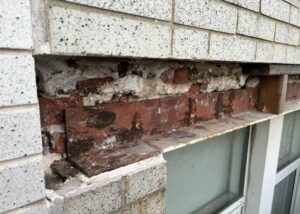
Many enclosure issues develop gradually over time and remain concealed until significant damage occurs.
Examples include:
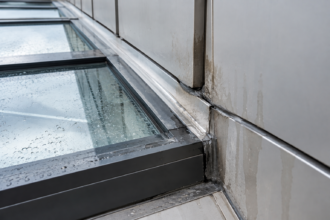
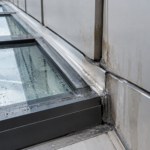
- Moisture intrusion behind facade systems
- Air leakage through concealed transitions
- Thermal performance degradation
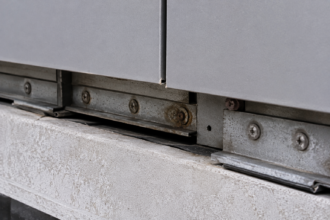
- Corrosion within anchorage systems
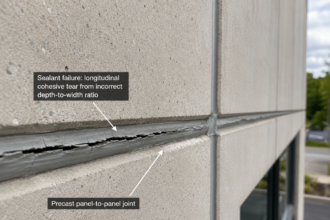
- Sealant deterioration
- Hidden condensation
- Insulation displacement
Unlike mechanical systems, enclosure systems generally operate passively.
As a result, performance problems may not generate obvious operational alerts.
Owners frequently rely on periodic inspections, occupant complaints, or visible distress before investigating enclosure conditions.
This reactive approach often increases repair costs and allows deterioration to progress further than necessary.
Digital twins combined with AI analysis may eventually improve visibility into these hidden performance conditions.
How Digital Twins Work in Building Envelope Applications
A building envelope digital twin typically combines multiple information sources into a centralized system.
Potential inputs include:
- BIM models
- Construction records
- Sensor data
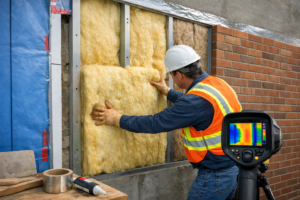
- Thermal imaging
- Weather exposure information
- Leak detection systems
- Maintenance records
- Inspection reports
- Energy-use data
- Facade access reports
AI systems can then analyze this information to identify abnormal patterns or predict elevated risk conditions.
For example, a digital twin could potentially compare:
- Historical weather exposure
- Interior humidity trends
- Thermal imaging anomalies
- Air leakage measurements
- Previous repair history
against known deterioration patterns associated with specific facade assemblies.
Over time, this may help owners identify potential problems before major failures occur.
Predictive Maintenance for Facade Systems
One of the most promising applications of AI-driven digital twins is predictive maintenance.
Traditional facade maintenance strategies are often based on:
- Fixed inspection intervals
- Visible deterioration
- Warranty timelines
- Reactive repair requests
These approaches may not accurately reflect actual enclosure performance conditions.
AI systems may eventually allow maintenance strategies to become more dynamic.
Potential predictive capabilities include:
- Forecasting sealant replacement timing
- Identifying elevated moisture risk
- Tracking thermal performance decline
- Monitoring facade movement trends
- Predicting coating deterioration
- Prioritizing facade inspection locations
For owners managing large property portfolios, this could significantly improve capital planning and maintenance budgeting.
Instead of treating all buildings similarly, owners may be able to prioritize resources based on actual risk exposure.
This is particularly valuable for:
- Hospitals
- Universities
- Commercial office portfolios
- Airports
- Government facilities
- Multifamily housing portfolios
where enclosure failures can create major operational disruption.
AI and Energy Performance Optimization
Building envelopes play a major role in overall energy performance.
Poor thermal continuity, uncontrolled air leakage, and solar heat gain can significantly increase HVAC loads and reduce occupant comfort.
AI-driven analysis within digital twin platforms may help owners better understand how enclosure systems affect operational efficiency.
Potential applications include:
- Identifying abnormal energy-use patterns
- Detecting thermal bridging conditions
- Evaluating facade solar performance
- Monitoring glazing efficiency
- Optimizing shading system operation
By continuously comparing operational data against baseline performance models, AI systems may help identify buildings where enclosure performance is declining.
This type of ongoing analysis could become increasingly important as energy codes and carbon reduction requirements become more aggressive.
Supporting Climate Resilience
Climate resilience is becoming an increasingly important consideration in building envelope design and operations.
Buildings are facing:
- More intense rainfall events
- Higher temperature extremes
- Increased storm exposure
- Greater humidity variation
- Wildfire-related air quality concerns
Digital twins combined with AI analysis may eventually help owners evaluate how buildings respond to changing environmental conditions.
For example, systems could potentially analyze:
- Wind-driven rain exposure
- Temperature cycling
- Solar loading patterns
- Moisture accumulation trends
- Thermal stress conditions
This information may help owners identify assemblies that are vulnerable to accelerated deterioration under changing climate conditions.
Over time, these insights could influence future retrofit planning and enclosure upgrade strategies.
Limitations of AI-Driven Monitoring
Despite the growing interest in digital twins and AI, there are important limitations.
The accuracy of predictive systems depends heavily on the quality of the underlying data.
Common challenges include:
- Incomplete sensor coverage
- Poor calibration
- Inconsistent maintenance records
- Missing construction documentation
- Limited historical performance data
- Data integration difficulties
Many existing buildings also lack the infrastructure needed to support advanced monitoring systems.
Retrofitting sensors and integrating building data platforms can be expensive and operationally disruptive.
There is also a risk of generating excessive amounts of data without clear operational value.
Not every building requires highly sophisticated monitoring systems.
Owners must balance technological capability against practical return on investment.
The Role of Consultants and Engineers
As AI-driven asset management systems become more common, building envelope consultants and facade engineers may take on expanded advisory roles.
Future responsibilities may include:
- Interpreting performance data
- Developing monitoring strategies
- Prioritizing inspection programs
- Evaluating predictive maintenance recommendations
- Validating AI-generated conclusions
- Advising on retrofit planning
Technical expertise will remain essential.
AI systems may identify trends or anomalies, but experienced professionals are still needed to interpret results and determine appropriate corrective action.
The enclosure industry operates within highly variable real-world conditions that cannot be fully reduced to automated analysis.
Conclusion
AI and digital twin technologies are beginning to influence how building envelope systems are monitored and managed throughout the operational life of buildings.
The greatest long-term potential lies in predictive maintenance, operational analysis, and improved visibility into enclosure performance.
These technologies may help owners:
- Reduce reactive repairs
- Improve capital planning
- Extend asset life cycles
- Improve energy performance
- Better manage climate-related risk
At the same time, successful implementation depends on reliable data, realistic expectations, and experienced technical oversight.
AI can support building envelope management, but it cannot replace the expertise required to evaluate enclosure performance and make informed engineering decisions.