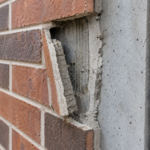
AI and the Future of Facade Engineering
Artificial intelligence is increasingly influencing how facade systems are designed, analyzed, coordinated, and maintained. While much of the public discussion around AI focuses on automation and generative design, the more immediate impact within facade engineering is operational and analytical.
Facade systems have become significantly more complex over the past two decades. Increasing performance expectations related to energy efficiency, occupant comfort, resilience, sustainability, and carbon reduction have expanded the technical demands placed on enclosure systems.
At the same time, project delivery schedules continue to compress.
Facade engineers are expected to evaluate increasingly sophisticated assemblies while coordinating with multiple stakeholders across architecture, structural engineering, mechanical systems, sustainability consulting, manufacturing, and construction.
AI is beginning to emerge as a tool that can help manage this complexity.
The technology is not replacing facade engineering expertise. Instead, it is changing how engineers process information, analyze risk, and manage technical workflows.
The Growing Complexity of Facade Engineering
Modern facade systems are no longer simple barriers between interior and exterior environments.
Today’s enclosure systems are expected to simultaneously address:
- Air control
- Water management
- Thermal performance
- Vapor control
- Structural movement
- Fire resistance
- Acoustic performance
- Daylighting
- Solar control
- Embodied carbon
- Long-term maintainability
These requirements often conflict with one another.
For example, highly glazed facades may improve daylighting and aesthetics while increasing solar heat gain and condensation risk. Aggressive thermal performance targets may introduce constructability challenges or increase sensitivity to workmanship deficiencies.
As the number of variables increases, so does the amount of analysis required.
AI tools are particularly effective in environments where large amounts of data must be evaluated quickly.
This is one reason the facade industry is becoming an increasingly viable environment for AI-assisted workflows.
AI-Assisted Performance Analysis
Performance modeling has historically required specialized expertise and significant manual effort.
Thermal simulations, condensation analysis, daylight studies, and energy modeling often involve multiple software platforms and repeated iterations.
AI-assisted analysis tools are beginning to reduce portions of this workload.
Current and emerging applications include:
- Rapid facade performance comparisons
- Automated optimization studies
- Thermal bridge identification
- Condensation risk prediction
- Energy-use forecasting
- Daylight and glare evaluation
- Climate responsiveness analysis
Instead of manually testing a limited number of design options, AI-driven workflows can evaluate hundreds or thousands of iterations based on defined performance criteria.
This can help teams identify better-performing configurations earlier in design.
For example, facade geometries can be optimized for orientation, solar exposure, and daylight penetration while balancing energy and occupant comfort objectives.
However, there is an important distinction between optimization and engineering judgment.
AI may identify mathematically efficient solutions that are impractical to construct, difficult to maintain, or overly sensitive to installation tolerances.
Facade engineering decisions must still account for real-world performance conditions.
Improving Design Coordination
Coordination failures remain one of the largest sources of facade-related project problems.
Transitions between enclosure systems are particularly vulnerable.
Many failures occur at interfaces involving:
- Roofing transitions
- Window-to-wall connections
- Expansion joints
- Balcony penetrations
- Structural interfaces
- Air barrier continuity
- Waterproofing terminations
AI-assisted coordination tools can help identify inconsistencies and missing information across large drawing and specification packages.
Potential capabilities include:
- Automated detail comparison
- Drawing inconsistency detection
- Specification cross-checking
- Clash identification
- Missing detail recognition
- Assembly continuity analysis
These tools are especially valuable on large projects involving multiple consultants and phased documentation packages.
Rather than manually reviewing hundreds of details for coordination conflicts, engineers can focus more attention on performance-critical areas.
Still, AI cannot independently determine whether a detail will perform successfully in the field.
A technically coordinated detail may still fail if it does not properly address:
- Drainage
- Differential movement
- Installation sequencing
- Material compatibility
- Access limitations
- Construction tolerances
Human review remains essential.
AI and Facade Constructability
One of the most difficult aspects of enclosure design is predicting how systems will actually be installed.
Constructability issues often emerge only after fabrication or field installation begins.
AI may eventually help reduce some of these risks.
Machine learning systems trained on historical project data could potentially identify assemblies associated with:
- High field failure rates
- Excessive RFIs
- Frequent sequencing conflicts
- Installation delays
- Water infiltration issues
- Warranty claims
Over time, firms may be able to use AI-driven analysis to improve standard details and reduce repeat coordination failures.
Some contractors are already experimenting with AI-assisted site monitoring using image recognition and drone scanning.
Potential construction-phase applications include:
- Installation progress tracking
- Detection of incomplete work
- Comparison between installed and modeled conditions
- Identification of missing components
- Quality control documentation
While promising, these technologies still face significant limitations.
Many enclosure deficiencies involve conditions that are difficult to identify visually, including:
- Improper substrate preparation
- Hidden discontinuities
- Moisture contamination
- Improper adhesion
- Incorrect sequencing
- Incomplete fastening
Experienced field observation remains critical.
Predictive Maintenance and Existing Facades
AI may ultimately provide the greatest long-term value in facade asset management.
Owners of large building portfolios often struggle to prioritize inspections, repairs, and capital planning decisions.
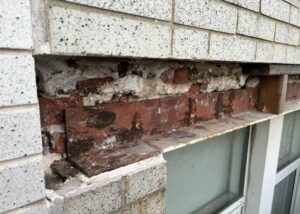
Facade deterioration is frequently gradual and difficult to detect before failures become severe.
AI systems can analyze operational and inspection data to identify trends associated with developing problems.
Potential applications include:
- Predicting sealant failure
- Tracking thermal performance degradation
- Identifying moisture intrusion patterns
- Monitoring facade movement
- Forecasting component replacement timing
- Prioritizing maintenance resources
As buildings generate increasing amounts of operational data through sensors and automation systems, AI-driven analysis may become more practical.
This could help owners move from reactive maintenance strategies toward more predictive approaches.
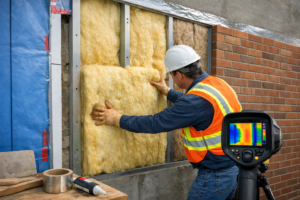
For example, thermal imaging data combined with weather exposure patterns may eventually help identify areas of elevated enclosure risk before visible leakage occurs.
However, predictive systems depend heavily on reliable input data.
Poor-quality inspections, inconsistent reporting, or incomplete maintenance records can significantly reduce accuracy.
Risks Associated With AI Adoption
The facade industry should approach AI adoption carefully.
One of the largest risks is overconfidence in automated outputs.
AI-generated recommendations often appear highly polished, even when incomplete or technically flawed.
Less experienced users may struggle to recognize these limitations.
Potential concerns include:
- Incorrect technical assumptions
- Oversimplified performance analysis
- Incomplete code interpretation
- Inaccurate material recommendations
- Poor understanding of constructability
- Bias within training data
- Lack of transparency in decision-making
There are also important contractual and liability considerations.
Questions remain regarding:
- Responsibility for AI-generated analysis
- Standard of care implications
- Ownership of generated content
- Data confidentiality
- Reliability of automated recommendations
Most firms are still determining how AI should be integrated into technical review processes.
For now, AI should support engineering workflows rather than replace technical decision-making.
The Continued Importance of Facade Expertise
Successful facades depend on more than analytical performance.
Experienced facade engineers understand:
- How materials behave over time
- Which details are difficult to execute consistently
- How contractors interpret drawings
- Where failures commonly occur
- How environmental exposure affects durability
- Which systems require tighter tolerances
This practical understanding is difficult to replicate through AI systems.
Facade engineering also involves constant tradeoffs between aesthetics, performance, cost, schedule, and constructability.
These decisions require judgment, communication, and accountability.
AI can assist with data processing and optimization, but it cannot replace professional responsibility.
Conclusion
AI is beginning to influence facade engineering in meaningful ways, particularly in areas involving analysis, coordination, documentation management, and operational monitoring.
The technology offers clear potential benefits:
- Faster data analysis
- Improved coordination workflows
- Better performance evaluation
- Enhanced operational insights
- More efficient document management
At the same time, enclosure systems remain highly dependent on constructability awareness, field conditions, material behavior, and professional judgment.
The most successful firms will likely be those that integrate AI thoughtfully while maintaining strong technical oversight and experienced engineering review.
In facade engineering, AI should be viewed as an enhancement to expertise rather than a replacement for it.