

The Role of Cavity Insulation in Moisture Control and Thermal Performance
Opening Angle: Recent Code Change
The International Energy Conservation Code (IECC) 2021 introduced a significant update in Section C402.1.3, emphasizing increased R-value requirements for cavity insulation in commercial buildings. This change is prompting architects to rethink their insulation strategies to meet both thermal and moisture performance standards. The heightened focus on energy efficiency cannot overshadow the critical need for moisture management.
As building envelopes become tighter, the potential for moisture-related failures increases. The balance between these two factors is not just a design challenge; it’s a necessity for long-term building performance and occupant health.
Section 1: Understanding Cavity Insulation in Exterior Wall Assemblies
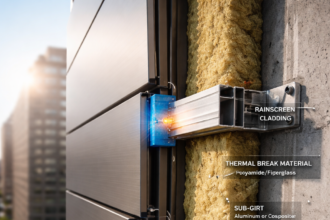
Cavity insulation is a critical component within the building envelope, designed to fit between studs in wall assemblies. It plays a important role in reducing heat transfer and improving energy efficiency. Common materials include fiberglass, mineral wool and spray foam, each offering distinct properties.
Fiberglass is cost-effective and easy to install, while mineral wool provides superior fire resistance. Spray foam, with its air-sealing properties, offers excellent thermal resistance but at a higher cost. The R-value, a measure of thermal resistance, is important.
It quantifies an insulation material’s ability to resist heat flow, directly impacting thermal performance. According to IECC 2021, Section C402.1.3, achieving the required R-value is not just about material selection but also about proper installation. An effective R-value considers real-world conditions, including thermal bridging and air leakage, to ensure the building’s energy performance meets the intended design.
For instance, improper installation can lead to gaps that significantly reduce the insulation’s effectiveness, highlighting the importance of precision in the field.
Section 2: The Dual Role of Cavity Insulation: Thermal and Moisture Control
Cavity insulation serves a dual purpose: enhancing thermal resistance and controlling moisture. By reducing heat transfer, it contributes to energy efficiency, lowering HVAC loads and improving occupant comfort. However, its role in moisture control is equally important.
Poorly managed moisture can lead to condensation, mold growth and structural damage. ASHRAE Standard 160-2016 outlines moisture design criteria, emphasizing the need for insulation materials that can manage vapor diffusion and limit moisture accumulation. The interaction between thermal performance and moisture management is complex.
Insulation must work alongside vapor and air barriers to create a cohesive system. An assembly that fails to balance these elements risks compromising not only energy efficiency but also the building’s structural integrity. The challenge lies in selecting insulation that performs well thermally while also mitigating moisture risks: a task that requires careful consideration of material properties and installation techniques.
For example, using a vapor barrier in the wrong climate zone can trap moisture, leading to deterioration over time.
Section 3: Best Practices for Selecting Cavity Insulation
Choosing the right insulation material involves more than just meeting R-value targets. It requires a strategic approach based on climate, building type and compatibility with other envelope components. In colder climates, materials with high thermal resistance are prioritized, while in warmer, humid zones, moisture control becomes critical.
ASTM C518 provides a standard for measuring thermal transmission properties, helping professionals assess material performance. Thermal bridging and air leakage are significant concerns. Insulation must address these issues by working in tandem with continuous insulation and air barriers.
Compatibility with fenestration and cladding systems is also essential to prevent gaps and thermal breaks. Best practices demand a complete view of the building envelope, where each component complements the others. The wrong insulation choice can lead to energy inefficiency and moisture problems, undermining the building’s overall performance.
For instance, failing to consider the interaction between insulation and window systems can result in unwanted condensation and energy loss.
Section 4: Installation Techniques for Optimal Performance
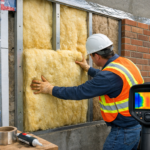
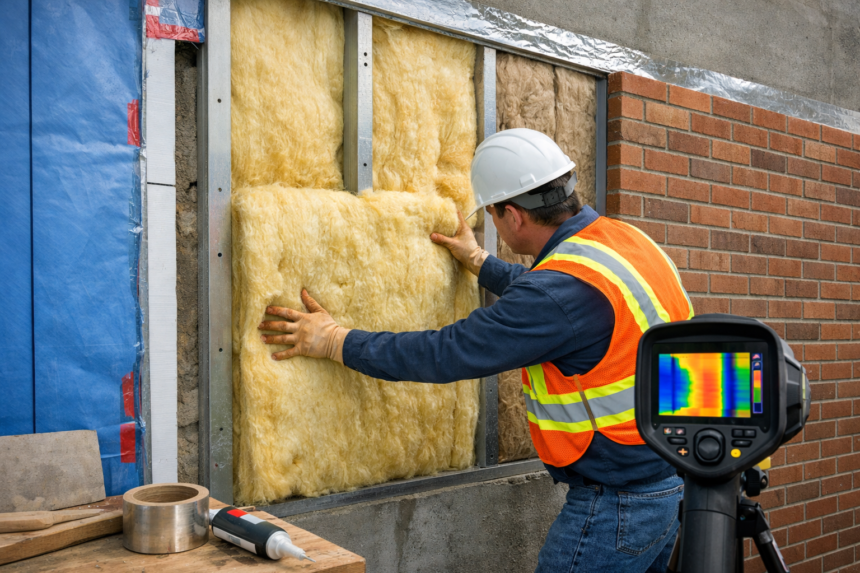
Proper installation of cavity insulation is paramount to achieving its intended performance. Installation techniques must ensure full coverage, avoiding gaps that can lead to thermal bridging and air leakage. The role of vapor and air barriers is critical.
These barriers must be integrated with insulation to form a continuous control layer. IECC 2021, Section C402.5, emphasizes the importance of air leakage control, requiring that assemblies be tested for compliance. Common installation errors include poor alignment, compression of materials and inadequate sealing around penetrations.
These mistakes can drastically reduce the effective R-value, leading to higher energy costs and potential moisture problems. Training and quality control are essential to ensure that installation meets design specifications. The specification-to-field gap is a persistent issue.
What is detailed in drawings often fails to translate to the construction site, leading to compromised performance. Ensuring that installers understand the critical nature of their work is key to achieving the desired outcomes. Field observations often reveal that even minor deviations from the specified installation can have significant impacts on performance.
Section 5: Addressing Moisture Challenges in Different Climates
Climate zones, as defined by the IECC, play a significant role in determining moisture control strategies. In humid climates, moisture management is paramount. Assemblies must include vapor-permeable materials to allow drying while preventing water ingress.
Conversely, in dry climates, the focus may shift to preventing condensation within the assembly. Case studies highlight the need for tailored solutions. In humid regions, failures often result from inadequate ventilation and improper vapor barrier placement.
Retrofitting existing buildings with moisture issues requires a careful assessment of existing conditions and targeted interventions, such as adding vapor-permeable layers or improving drainage. Understanding the unique challenges of each climate zone is essential for designing effective moisture control strategies. A one-size-fits-all approach fails to address the specific needs dictated by local environmental conditions.
For example, a successful retrofit in a coastal area might involve enhancing the drainage plane and selecting materials that can withstand salt air exposure.
Section 6: Innovations and Emerging Technologies in Cavity Insulation
The field of cavity insulation is witnessing significant advancements, with new materials and technologies enhancing performance. Innovations include phase-change materials that regulate temperature by absorbing and releasing heat. Smart insulation systems are emerging, equipped with sensors for real-time moisture monitoring.
These technologies offer the potential for proactive moisture management, alerting building operators to potential issues before they become problems. ASTM E96 provides a standard for assessing water vapor transmission, a key factor in evaluating new materials. Future trends point towards increased integration of smart technologies and sustainable materials.
The industry must remain adaptable, embracing these innovations to enhance both thermal and moisture performance. Staying informed about these developments is important for professionals seeking to maintain a competitive edge. For instance, the use of bio-based insulation materials is gaining traction, offering both environmental benefits and potential improvements in moisture control.
Section 7: Case Studies: Successes and Lessons Learned
Analyzing successful projects reveals key insights into optimizing cavity insulation for thermal and moisture performance. Projects that prioritize complete design and careful execution often achieve superior results. For example, a commercial building in a humid climate successfully integrated cavity insulation with a continuous air barrier, resulting in reduced energy consumption and no moisture-related issues.
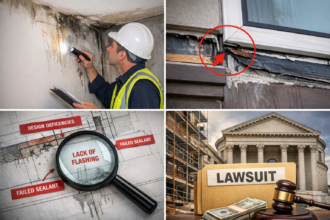
Conversely, projects with failures often exhibit common themes: inadequate installation, poor material selection and lack of coordination among trades. Lessons learned emphasize the need for collaboration and adherence to design intent. Practitioners consistently highlight the importance of quality control and ongoing monitoring to ensure long-term performance.
These case studies highlight the value of experience and diligence in achieving successful outcomes. In one notable case, a failure to coordinate between insulation installers and HVAC contractors led to significant energy losses and moisture intrusion, highlighting the importance of interdisciplinary collaboration.
Closing Angle: Practical Recommendation
Architects must integrate cavity insulation thoughtfully into their designs, considering both current code requirements and emerging technologies. Staying informed about updates to standards and best practices is essential for delivering high-performance buildings. Collaboration with building envelope consultants can provide valuable insights and ensure compliance with evolving regulations.
By prioritizing both thermal efficiency and moisture control, architects can enhance building performance and occupant wellbeing. Continuous education and a commitment to quality will drive the industry forward, ensuring that buildings not only meet but exceed expectations for energy efficiency and durability.