

Insurance Is Quietly Rewriting the Rules of Building Envelope Design
- Introduction: A New, Unwritten Client
- From Loss History to Design Influence
- Roofing: The First Area of Scrutiny
- Wildfire Exposure and the Rise of Resilient Cladding
- Water Management: The Quiet Center of Risk
- The Emerging Role of Insurance Risk Engineers
- The Gap Between Codes and Insurability
- Implications for Architects and Envelope Consultants
- A Subtle Shift in Project Stakeholders
- Conclusion: Designing for Performance—and Insurability
Introduction: A New, Unwritten Client
For decades, building envelope design has been shaped primarily by building codes, owner requirements, and the practical judgment of architects and consultants. Insurance carriers existed in the background—reviewing risk profiles, issuing policies, and responding after failures occurred.
That dynamic is changing.
Following a series of costly climate-driven losses—hurricanes, wildfire disasters, severe convective storms, and widespread water intrusion claims—insurance companies are reassessing the risks associated with the building envelope. The result is a shift that many design teams are only beginning to recognize: insurers are increasingly influencing how exterior assemblies are designed, detailed, and specified.
In some regions, carriers are already requiring higher-performing roof assemblies, wildfire-resistant cladding, and enhanced water management details as conditions of coverage. While these requirements are rarely codified in the design process, they are emerging during underwriting, risk engineering reviews, and policy negotiations.
In effect, a new stakeholder is quietly entering the design conversation.
From Loss History to Design Influence
Insurance carriers operate on actuarial evidence. When losses accumulate in specific building components, underwriting standards eventually change.
In recent years, the building envelope has become a central focus for three reasons:
- Water intrusion claims remain one of the most frequent and expensive property losses.
Leaks from roofs, window perimeters, façade penetrations, and failed waterproofing systems generate persistent claims across commercial real estate portfolios. - Climate-related disasters have exposed envelope vulnerabilities.
Hurricanes, wind-driven rain, hail, wildfire exposure, and extreme temperature cycles are pushing assemblies beyond what many legacy details were designed to withstand. - Repair costs for façade and roofing failures are extremely high.
Unlike interior systems, envelope failures often require major demolition, access equipment, and occupant disruption to correct.
From an insurer’s perspective, the building envelope is no longer simply a maintenance concern—it is a primary risk driver.
Roofing: The First Area of Scrutiny
Roof systems are the envelope component most visibly affected by insurance pressure.
After billions of dollars in storm-related losses across North America, many insurers have begun requiring higher wind and impact ratings for roofing assemblies than those mandated by code.
Examples increasingly seen in underwriting reviews include:
- Higher uplift ratings for roof assemblies, particularly in hurricane and severe storm regions
- Impact-resistant roof coverings in hail-prone areas
- Stricter installation documentation, including manufacturer inspections and certified installers
- Enhanced drainage design to reduce ponding-related failures
In some cases, insurance engineers are evaluating roof assemblies using testing standards originally developed for extreme wind events, even in locations where local codes do not require them.
The implication for design teams is clear: minimum code compliance may no longer satisfy the risk expectations of insurers.
Wildfire Exposure and the Rise of Resilient Cladding
Wildfire risk is another area where insurance pressure is reshaping envelope decisions.
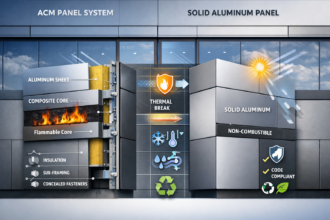
In the western United States and increasingly in parts of the Southeast, insurers are scrutinizing exterior wall assemblies for ignition vulnerability. Combustible cladding systems—particularly those with exposed foam insulation or combustible rainscreen components—are attracting closer attention.
Insurance-driven recommendations increasingly include:
- Noncombustible exterior wall assemblies
- Fire-resistant soffit and eave construction
- Ember-resistant vents and openings
- Reduced use of combustible façade materials in high-risk zones
While these strategies may already appear in wildfire-adapted building codes, insurers are sometimes requiring them even in jurisdictions where they are not mandated.
For architects, this creates a new layer of specification pressure—one that originates not from regulators but from risk managers.
Water Management: The Quiet Center of Risk
Perhaps the most consequential influence insurers may exert on envelope design involves water management.
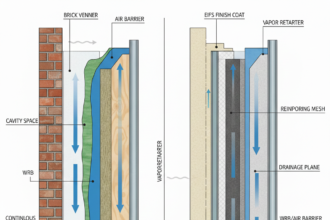
Water intrusion claims rarely involve dramatic structural failures. Instead, they result from subtle detailing problems: poorly integrated flashing, inadequate drainage planes, sealant-dependent joints, or transitions that were never fully resolved in the design documents.
Over time, these failures accumulate into substantial insurance payouts.
Risk engineers reviewing buildings increasingly focus on several envelope characteristics:
- Redundant drainage strategies
- Proper integration of air and water barrier transitions
- Robust window and curtain wall perimeter detailing
- Effective slope and drainage for horizontal surfaces
- Avoidance of sealant-only water control strategies
In other words, the same details that building envelope consultants routinely emphasize are now becoming areas of underwriting concern.
This alignment may ultimately improve building performance—but it also raises questions about how much influence insurers will exert over design decisions.
The Emerging Role of Insurance Risk Engineers
One mechanism through which insurers are affecting design is the growing use of risk engineering reviews.
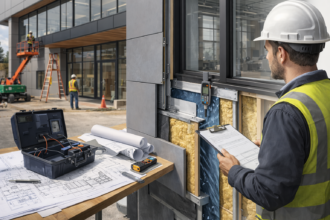
Large commercial projects increasingly undergo evaluation by insurance-appointed engineers either during construction or prior to policy issuance. These reviews typically focus on loss prevention measures.
While historically centered on fire protection systems and structural hazards, some reviews are expanding to include building envelope risks.
Common recommendations include:
- Upgraded roofing assemblies
- Improved drainage provisions
- More robust exterior materials in severe weather zones
- Enhanced maintenance planning for critical envelope components
Although these recommendations may not carry the force of code, they can influence policy terms, premiums, and coverage limits.
For owners, the financial implications often make these recommendations difficult to ignore.
The Gap Between Codes and Insurability
One of the most important implications of this trend is the widening gap between code compliance and insurability.
Building codes establish minimum acceptable performance levels intended to protect life safety and basic property value. Insurance carriers, however, evaluate risk through the lens of long-term loss exposure.
As a result, insurers may expect envelope assemblies that exceed minimum code requirements in order to reduce claim probability.
For design teams, this creates several challenges:
- Unclear expectations. Insurance-driven requirements often appear late in the project lifecycle.
- Conflicting standards. Insurers may reference testing standards unfamiliar to the design team.
- Budget implications. Upgraded assemblies can significantly affect construction costs.
Without early coordination, these issues can emerge during underwriting reviews—long after design decisions have been made.
Implications for Architects and Envelope Consultants
For architects and building enclosure specialists, the increasing influence of insurers presents both risks and opportunities.
Risks
Late-stage insurance requirements can force redesign, substitutions, or expensive upgrades. They may also create tension between owners, contractors, and design teams when risk engineers challenge previously approved assemblies.
Opportunities
At the same time, many insurance-driven concerns align closely with best practices in building enclosure design. Robust drainage, resilient materials, and well-tested roof assemblies are already central principles of durable construction.
Design teams that proactively address these issues may reduce both failure risk and insurance friction.
Several strategies are becoming increasingly valuable:
- Considering extreme weather resilience during early envelope design
- Selecting assemblies with documented performance history
- Prioritizing drainage and redundancy in water control strategies
- Communicating envelope risk considerations to owners during design development
In effect, envelope consultants may become key intermediaries between design teams and insurance risk expectations.
A Subtle Shift in Project Stakeholders
Perhaps the most significant aspect of this trend is how quietly it is unfolding.
Insurance carriers rarely publish formal design guidelines for building envelopes. Their influence emerges indirectly—through underwriting requirements, risk engineering reports, and policy conditions.
As a result, many design teams encounter these expectations only after a project is largely designed.
Over time, however, insurers may become an implicit stakeholder in envelope performance decisions.
Just as fire protection requirements evolved through the interaction of codes, insurers, and loss history, building enclosure design may be entering a similar phase of risk-driven refinement.
Conclusion: Designing for Performance—and Insurability
The building envelope has always served as the building’s first line of defense against the elements. As climate risks intensify and repair costs escalate, insurers are paying closer attention to how that defense is constructed.
Higher-performing roofs, resilient cladding systems, and better water management details are not new ideas. What is new is the growing financial pressure behind them.
For architects and envelope consultants, the question is no longer simply whether a system meets code. Increasingly, it may also need to satisfy the risk thresholds of insurers.
Projects that recognize this shift early may avoid costly surprises—and may ultimately produce buildings that perform better over the long term.
The rules of envelope design are not being rewritten in building codes alone. In many cases, they are being quietly rewritten in insurance underwriting offices.