

Ice Dams Are Getting Worse—Not Better—With Modern Insulation Retrofits
- Introduction: A Counterintuitive Outcome of Energy Retrofits
- Why Ice Dams Form
- Why Ice Dams Still Occur on “Well-Insulated” Roofs
- Air Leakage: The Dominant Driver
- Thermal Bridging Through Framing
- Ventilation Disruptions Introduced During Retrofits
- Solar Gain and Exterior Influences
- Field Clues That Point to Retrofit-Related Ice Dams
- Common Retrofit Mistakes That Increase Ice Dam Risk
- Practical Design Strategies for Retrofit Projects
- Prioritize Air Sealing Before Adding Insulation
- Maintain Continuous Ventilation Channels
- Consider Exterior Roof Insulation During Re-Roofing
- Address Mechanical Heat Sources in Attics
- Evaluate Roof Geometry During Retrofits
- Why the Issue Is Becoming More Visible
- Conclusion: Insulation Alone Cannot Control Ice Dams
Introduction: A Counterintuitive Outcome of Energy Retrofits
For decades, ice dams have been treated as a straightforward building science problem with a straightforward solution: add insulation. The logic seems sound. If the roof deck stays cold, snow should remain frozen, preventing the uneven melting that leads to ice dam formation.
Yet across many cold-climate retrofit projects, the opposite outcome is appearing. Buildings that recently received insulation upgrades are still developing severe ice dams—sometimes worse than before the retrofit work was performed. In some cases, problems emerge during the first winter after the upgrade.
This does not mean insulation is ineffective. The issue is that insulation retrofits often change the heat and airflow dynamics of existing roof assemblies in ways designers and contractors may not anticipate. When projects focus narrowly on increasing R-value without addressing air leakage, ventilation continuity, and thermal bridging, the result can be uneven roof temperatures that encourage snowmelt and ice accumulation.
For architects and building envelope consultants, the takeaway is clear: insulation alone rarely determines roof performance. Ice dam risk depends on how insulation, air control layers, and ventilation systems function together within the roof assembly.
Why Ice Dams Form
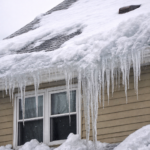
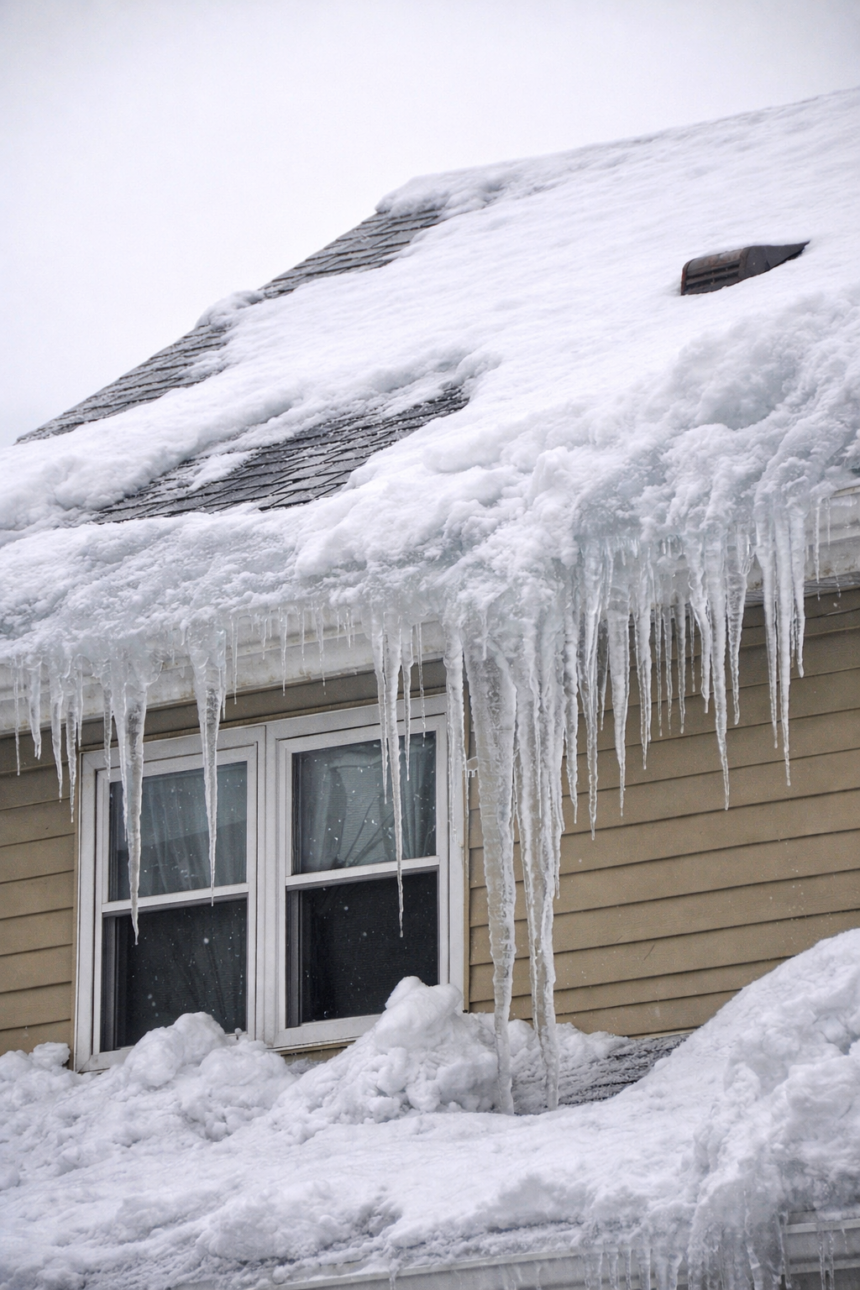
Ice dams occur when snow melts unevenly across a roof surface. Meltwater flows downward until it reaches a colder section of the roof—typically near the eaves—where it refreezes. As this process repeats, a ridge of ice forms along the roof edge, trapping additional meltwater behind it.
Once that ridge develops, water can back up beneath shingles or other roofing materials and infiltrate the roof assembly. Interior damage often follows quickly: saturated insulation, stained ceilings, mold growth, and in severe cases, deterioration of framing or sheathing.
Three conditions typically drive this process:
- Heat escaping from the building into the roof assembly
- Uneven roof surface temperatures that cause localized melting
- Exterior temperatures cold enough to refreeze meltwater near the eaves
Traditional guidance focused on reducing heat loss through the roof deck. If the roof surface remains uniformly cold, snow remains frozen and melts evenly during spring thaw.
In retrofit conditions, however, achieving uniform roof temperatures is more complicated than simply adding insulation.
Why Ice Dams Still Occur on “Well-Insulated” Roofs
One of the most common questions raised by building owners is why ice dams continue to appear after insulation upgrades.
The answer lies in how heat moves through existing buildings. Increasing insulation depth can reduce overall heat loss, but it does not necessarily eliminate the pathways through which heat reaches the roof deck. In some cases, insulation retrofits can even change how that heat moves, creating localized warm areas that accelerate snowmelt.
Several mechanisms contribute to this outcome.
Air Leakage: The Dominant Driver
Among the factors influencing ice dam formation, uncontrolled air leakage is often the most significant.
Warm interior air can escape into attics through numerous pathways, including:
- Recessed lighting fixtures
- Electrical penetrations
- Plumbing stacks and vent pipes
- Chimney or flue clearances
- Top plates of interior partition walls
- Attic access hatches
When this air enters the attic, it carries both heat and moisture. The heat warms localized sections of the roof deck, initiating snowmelt. Meanwhile, the moisture can condense within insulation or on structural members, contributing to long-term durability concerns.
If insulation is added without sealing these air leakage paths, the retrofit may reduce general heat loss while still allowing concentrated heat to reach the roof deck. In effect, the heat becomes more localized rather than eliminated.
These concentrated warm spots are ideal conditions for uneven snowmelt and ice dam formation.
Thermal Bridging Through Framing
Even well-insulated attic assemblies contain structural elements that conduct heat more readily than surrounding insulation.
Rafters, trusses, and other framing members act as thermal bridges. When insulation upgrades occur primarily between framing members, these structural components can remain relatively warm compared to adjacent insulated areas.
The result is a roof surface with alternating warm and cold zones. Snow tends to melt more quickly above the framing lines while remaining frozen elsewhere. This uneven melting pattern can accelerate the development of meltwater channels and ice accumulation near the roof edge.
In retrofit scenarios where exterior insulation is not added above the roof deck, thermal bridging through framing often remains a persistent contributor to ice dam risk.
Ventilation Disruptions Introduced During Retrofits
Attic ventilation plays an important role in maintaining consistent roof temperatures. However, insulation upgrades frequently alter or disrupt existing ventilation pathways.
Blocked Soffit Vents
When loose-fill insulation is added to attic floors, insulation can easily spill into the eave cavity. Without ventilation baffles, soffit vents may become partially or fully blocked.
This prevents cold exterior air from entering the attic ventilation channel. The roof deck near the eaves becomes warmer than intended, increasing the likelihood that snow will melt higher up the roof slope and refreeze at the edge.
Insufficient Ridge Vent Capacity
In some buildings, ridge vents or other exhaust openings were originally designed for lower insulation levels and modest airflow. As insulation depth increases, attic air movement can become more restricted.
When ventilation cannot effectively remove warm air, roof deck temperatures rise—even if the attic appears well insulated.
Complex Roof Geometry
Dormers, intersecting roof planes, skylights, and valleys often interrupt continuous ventilation paths. In retrofit projects, these areas may become zones where warm air accumulates or ventilation airflow stagnates.
Localized warming in these areas frequently corresponds with the first locations where snow begins to melt.
Solar Gain and Exterior Influences
Interior heat loss is not the only factor affecting roof temperatures. Solar radiation can also play a significant role in winter snowmelt.
Even when outdoor air temperatures remain below freezing, sunlight can warm dark roofing materials enough to initiate melting. Roof areas exposed to direct sun may briefly rise above freezing while shaded areas remain colder.
If insulation upgrades have already created subtle temperature differences across the roof deck, solar heating can amplify those differences. Meltwater produced during sunny periods often refreezes as temperatures drop later in the day, contributing to progressive ice buildup along the eaves.
Field Clues That Point to Retrofit-Related Ice Dams
When ice dams worsen after insulation upgrades, several patterns often appear during winter inspections.
Common indicators include:
- Snow melting in distinct stripes aligned with rafters or trusses
- Icicles forming directly below attic penetrations or mechanical chases
- Heavy ice accumulation above blocked soffit vents
- Meltwater refreezing in isolated locations rather than continuously along the eave
These patterns typically indicate uneven heat distribution within the roof assembly rather than simple under-insulation. They often point to a combination of air leakage, thermal bridging, and compromised ventilation pathways.
For consultants performing forensic evaluations, these visual clues can quickly reveal whether a retrofit changed the building’s thermal behavior.
Common Retrofit Mistakes That Increase Ice Dam Risk
Across many retrofit projects, several recurring design and installation mistakes contribute to worsening ice dam conditions.
Adding insulation without comprehensive air sealing
Increasing R-value without sealing air leakage paths allows warm interior air to continue entering the attic.
Blocking eave ventilation
Loose-fill insulation installed without ventilation baffles often obstructs soffit airflow.
Ignoring thermal bridging through framing
Rafter-based insulation systems without exterior insulation leave structural members as major heat pathways.
Assuming ventilation alone will solve the problem
Ventilation cannot compensate for significant air leakage from the occupied space below.
Overlooking mechanical heat sources
Unsealed ductwork, exhaust fans, and recessed lighting fixtures can introduce significant heat into the attic.
These oversights are common in retrofit programs driven primarily by energy targets or cost constraints.
Practical Design Strategies for Retrofit Projects
Preventing ice dams in existing buildings requires addressing the roof assembly as a complete system rather than focusing solely on insulation thickness.
Several strategies consistently reduce risk.
Prioritize Air Sealing Before Adding Insulation
Air leakage control should precede any insulation upgrade. Effective air sealing typically includes:
- Sealing top plates and wall intersections
- Air-sealing mechanical and plumbing penetrations
- Installing airtight attic access covers
- Replacing or sealing recessed lighting fixtures
Reducing air movement into the attic significantly lowers heat transfer to the roof deck.
Maintain Continuous Ventilation Channels
Ventilation baffles installed at the eaves help preserve airflow from soffit vents to ridge vents. These channels prevent insulation from blocking the ventilation pathway.
Consistent airflow keeps roof deck temperatures closer to outdoor conditions.
Consider Exterior Roof Insulation During Re-Roofing
When roofs are replaced, adding rigid insulation above the roof deck can dramatically reduce thermal bridging through rafters or trusses. This approach helps create more uniform roof temperatures across the assembly.
Address Mechanical Heat Sources in Attics
Ductwork, exhaust fans, and other mechanical equipment located in attics should be sealed and insulated to minimize heat leakage.
Evaluate Roof Geometry During Retrofits
Complex roof shapes may require localized ventilation solutions or alternative insulation strategies to prevent warm pockets from forming.
Why the Issue Is Becoming More Visible
Several industry trends are making ice dam problems more noticeable in modern retrofit programs.
Energy-efficiency incentives are accelerating insulation upgrades across large numbers of older buildings. Many of these structures were never designed for high-performance envelopes, and their roof assemblies may respond unpredictably when insulation levels change.
At the same time, retrofit work is often performed under tight budgets and schedules. Air sealing and ventilation improvements may receive less attention than insulation installation because they are more labor-intensive and difficult to verify.
Finally, winter weather patterns in many regions increasingly feature cycles of snowfall followed by short periods of warming and refreezing. These conditions amplify the impact of small temperature variations across roof surfaces.
Together, these factors make ice dams more likely to appear—even on buildings that appear well insulated.
Conclusion: Insulation Alone Cannot Control Ice Dams
The persistence—and sometimes worsening—of ice dams after insulation retrofits highlights a fundamental principle of building envelope design: performance depends on the interaction of multiple systems.
Adding insulation can reduce overall heat loss, but it does not automatically produce uniform roof temperatures. Air leakage, thermal bridging, ventilation effectiveness, and solar exposure all influence how snow melts across a roof surface.
When retrofit projects focus primarily on increasing R-value without addressing these other factors, the result can be uneven melting patterns that drive ice dam formation.
As energy-efficiency retrofits continue to accelerate, designers and consultants must approach roof upgrades as integrated building science problems. Insulation is an essential component of that strategy—but only when combined with effective air control, ventilation continuity, and careful attention to how heat moves through the entire roof assembly.