

The construction industry is undergoing a profound transformation. As environmental awareness grows and technology advances, green building practices are becoming the foundation of modern architecture. Developers, architects, and engineers are now challenged to design buildings that are not only functional and visually appealing, but also energy-efficient, sustainable, and resilient.
Continuous Insulation: Meeting Energy Codes with Innovative Solutions
Introduction
In the quest for energy efficiency and sustainability, continuous insulation (CI) has emerged as a critical component of modern building envelope systems. As energy codes become increasingly stringent, architects, facade engineers, building envelope consultants, and commercial contractors must adapt to meet these evolving requirements. This article delves into the importance of continuous insulation, exploring innovative solutions and practical considerations for its implementation in building projects.
Understanding Continuous Insulation
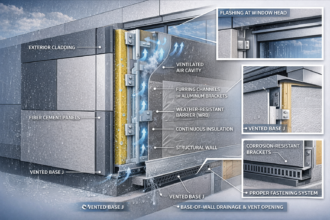
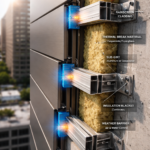
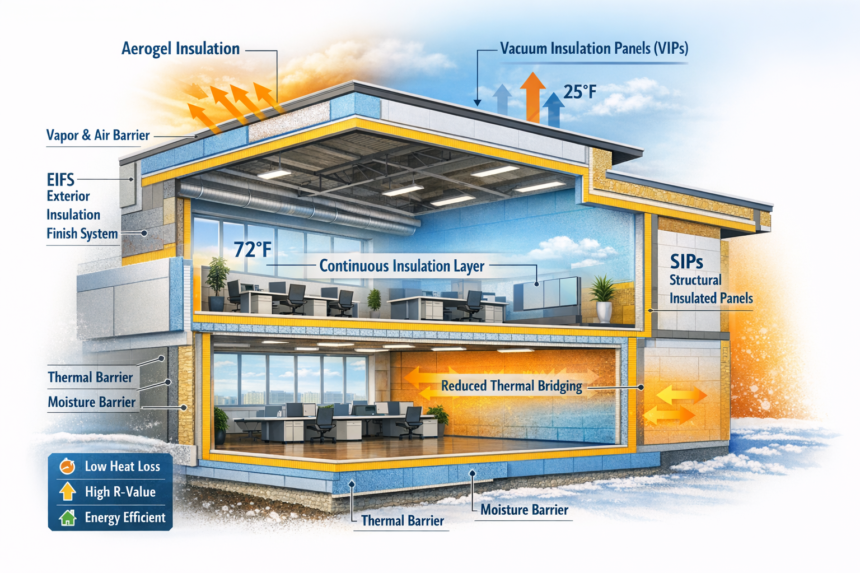
Continuous insulation refers to an uninterrupted layer of thermal insulation that is applied across all structural members without thermal bridges other than fasteners and service openings. It is typically installed on the exterior or interior of a building’s envelope, providing a consistent thermal barrier that enhances energy efficiency.
The Role of CI in Energy Codes
Energy codes, such as the International Energy Conservation Code (IECC) and ASHRAE 90.1, mandate specific insulation requirements to reduce energy consumption in buildings. Continuous insulation plays a pivotal role in meeting these codes by minimizing heat flow through the building envelope, thereby reducing heating and cooling loads.
Innovative Solutions for Continuous Insulation
As the demand for energy-efficient buildings grows, so does the need for innovative CI solutions. Here are some cutting-edge approaches that professionals are adopting:
Advanced Material Technologies
-
Vacuum Insulation Panels (VIPs): These panels offer high thermal resistance in a thin profile, making them ideal for projects with space constraints. VIPs are particularly useful in retrofits where additional insulation thickness is limited.
-
Aerogel Insulation: Known for its lightweight and superior insulating properties, aerogel is increasingly used in building envelopes. Its flexibility allows it to conform to complex geometries, providing continuous insulation in challenging areas.
Integrated Systems
-
Exterior Insulation and Finish Systems (EIFS): EIFS combines insulation with a finished surface, offering both thermal performance and aesthetic appeal. This system is particularly effective in reducing thermal bridging and improving the overall energy efficiency of the building envelope.
-
Structural Insulated Panels (SIPs): SIPs integrate insulation with structural elements, streamlining construction while providing excellent thermal performance. These panels are prefabricated, reducing on-site labor and ensuring consistent quality.
Practical Considerations
Implementing continuous insulation requires careful planning and execution. Here are some practical considerations to ensure successful application:
Design and Detailing
-
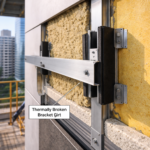
Thermal Bridging: Identify and address potential thermal bridges in the design phase. Use thermal modeling to predict and mitigate heat flow through structural elements.
-
Moisture Management: Ensure that the CI system includes an effective moisture barrier to prevent condensation and water intrusion, which can compromise insulation performance.
Installation Challenges
-
Compatibility with Existing Structures: In retrofits, assess the compatibility of CI materials with existing building components. This may involve structural reinforcement or modifications to accommodate additional insulation.
-
Quality Control: Implement rigorous quality control measures during installation to ensure that insulation is continuous and free of gaps or compressions that could reduce its effectiveness.
Common Pitfalls
Despite its benefits, continuous insulation can present challenges if not properly executed. Here are some common pitfalls to avoid:
Inadequate Detailing
Poor detailing can lead to thermal bridging, moisture ingress, and compromised insulation performance. Ensure that all transitions, penetrations, and joints are meticulously detailed and sealed.
Overlooking Air Barrier Integration
Continuous insulation must work in tandem with an effective air barrier system. Neglecting this integration can result in air leakage, reducing the overall energy efficiency of the building envelope.
Ignoring Code Compliance
Failure to comply with local energy codes can result in costly redesigns and delays. Stay informed about the latest code requirements and ensure that CI solutions meet or exceed these standards.
Conclusion
Continuous insulation is a vital component in achieving energy-efficient building envelopes that meet modern energy codes. By embracing innovative materials and integrated systems, professionals can enhance thermal performance while addressing practical challenges. Careful design, detailing, and installation are crucial to maximizing the benefits of CI and avoiding common pitfalls. As energy codes continue to evolve, staying informed and adaptable will be key to success in the ever-changing landscape of building envelope systems.
In summary, continuous insulation not only meets the demands of current energy codes but also sets the stage for future advancements in sustainable building practices. By prioritizing CI in design and construction, industry professionals can contribute to a more energy-efficient and environmentally responsible built environment.